Giới thiệu ngày Tết cổ truyền bằng tiếng Anh - IELTS Speaking: Tet Holiday
Giới thiệu Tết bằng tiếng Anh như thế nào cho ấn tượng? Cùng tham khảo các cách triển khai về chủ đề Tết dưới đây với từ vựng và bài mẫu Speaking cùng IELTS Fighter nha.
PDF sẽ được cập nhật bên dưới nhé.
Vocabulary - Tet holiday
Để nói về ngày Tết thì các bạn cũng có thể tự soạn bài nói cho mình với những hướng triển khai khác nhau. Một số từ vựng bổ sung về ngày Tết có thể dùng cho Speaking hoặc chia sẻ giới thiệu cho người khác về ngày Tết bằng tiếng Anh dưới đây nhé.
Từ vựng tiếng Anh về Tết
|
Từ vựng |
Phiên âm |
Loại từ |
Nghĩa |
|
traditions and rituals |
/trəˈdɪʃnz ənd ˈrɪtʃuəlz/ |
(n) |
phong tục tập quán |
|
adopt |
/əˈdɒpt/ |
(v) |
du nhập |
|
sticky rice cake |
/stɪki ˈraɪs keɪk/ |
(n) |
bánh nếp |
|
savory |
/ˈseɪvəri/ |
(adj) |
mặn |
|
principle |
/ˈprɪnsəpl/ |
(n) |
quy tắc |
|
filling |
/ˈfɪlɪŋ/ |
(n) |
nhân |
|
ground |
/ɡraʊnd/ |
(v) |
xay |
|
press |
/pres/ |
(v) |
ép |
|
seasonings |
/ˈsiːzənɪŋz/ |
(n) |
gia vị |
|
custom |
/ˈkʌstəm/ |
(n) |
phong tục |
|
mark |
/mɑːk/ |
(v) |
đánh dấu |
|
concise |
/kənˈsaɪs/ |
(adj) |
ngắn gọn |
|
Year of Rooster |
/jɪə(r) əv ˈruːstə(r)/ |
(n) |
năm Dậu |
|
abstain from |
/əbˈsteɪn frəm/ |
(v) |
tránh, kiêng |
|
refrain from |
/rɪˈfreɪn frəm/ |
(v) |
hạn chế |
|
kumquat tree |
/ˈkʌmkwɒt triː/ |
(n) |
cây quất |
|
peach blossom |
/piːtʃ ˈblɒsəm/ |
(n) |
cây đào |
|
apricot blossom |
/ˈeɪprɪkɒt ˈblɒsəm/ |
(n) |
cây mai |
|
greeting |
/ˈɡriːtɪŋ/ |
(n) |
lời chào |
|
essentially |
/ɪˈsenʃəli/ |
(adv) |
về cơ bản, thực chất |
|
challenging |
/ˈtʃælɪndʒɪŋ/ |
(adj) |
khó, thử thách |
|
accurate |
/ˈækjərət/ |
(adj) |
chính xác, đúng đắn |
|
get rid of |
/ɡet rɪd əv/ |
(phr.v) |
loại bỏ, bỏ |
|
security and prosperity |
/sɪˈkjʊərəti ənd prɒˈsperəti/ |
(n) |
an khang thịnh vượng |
|
longevity |
/lɒnˈdʒevəti/ |
(n) |
tuổi thọ cao |
Từ vựng món ăn ngày Tết
|
Từ vựng |
Phiên âm |
Loại từ |
Nghĩa |
|
Red Vietnamese Melon Sticky Rice |
/red ˌviːetnəˈmiːz ˈmelən ˈstɪki raɪs/ |
(n) |
Xôi gấc (Gấc nằm trong họ “melon”) |
|
Deep-fry Spring Roll |
/ˌdiːp ˈfraɪ ˌsprɪŋ ˈrəʊl/ |
(n) |
Chả nem rán |
|
Vietnamese Meatball |
/ˌviːetnəˈmiːz ˈmiːtbɔːl/ |
(n) |
Mọc |
|
Chinese Noodle |
/ˌtʃaɪˈniːzˈnuːdl/ |
(n) |
Bún tàu/ Miến (Trung Quốc không phân biệt miến - bún - phở) |
|
Vietnamese Fermented Noodle |
/ˌviːetnəˈmiːz fəˈmentɪd ˈnuːdl/ |
(n) |
Bún |
|
Steamed white-cut Chicken |
/stiːmd waɪt kʌtˈtʃɪkɪn/ |
(n) |
Gà luộc cắt miếng |
|
Bamboo Shoot |
/ˌbæmˈbuː ʃuːt/ |
(n) |
Măng |
|
Pig’s trotter |
/pɪɡˈtrɒtə(r)/ |
(n) |
Chân giò |
|
Pickled Shallot |
/ˈpɪkld ʃəˈlɒt/ |
(n) |
Hành muối |
|
Caishen |
(n) |
Thần Tài |
|
|
Incense |
/ˈɪnsens/ |
(n) |
Hương |
Bài mẫu giới thiệu ngày Tết bằng tiếng Anh hai miền:
For hundreds of years, Tet has been a traditional festival and ritual ceremony across Vietnam. Its importance in spiritual life as a break-off period was honored by ordinary people and royal dynasties. When Vietnam came into the new world, many things happen to change, yet Tet stays as it has been for generations, with a few modern twists.
From every street, every house, and every window, any foreigner could spot that this biggest holiday is coming so close. Businesses and schools start to close down between the 23rd and 27th of December (Lunar Calendar), for students and employees to pack up and head home. Red lanterns and Tet-style LEDs are hung up everywhere; commercial advertisements now only field Tet-vibe. In some public spots or large areas, kumquat trees, peach blossoms, or apricot blossoms are planted and decorated.
Yet, Vietnamese businesses don’t basically stop. Our individual household businesses start weeks before Tet. Tet Fiona markets are open in every municipality of Vietnam, from small villages to crowded cities, with thousands of “Tet” trees.
Though both the Southern and Northern regions have many common things, Vietnamese people still easily tell them apart. Northern Tet’s traditional dishes focus on its complexity in detail, layers, and taste; while Southern Tet’s traditional dishes focus on its simplicity, folklore-kind in the table. However, we still have the same dishes like steamed white-cut chicken, deep-fried spring rolls, or sticky rice. In the North, people would have Banh Chung (a square-like cake that is stuffed with meat, beans, and sticky rice, covered in “dong” or banana leaf and steamed) and sticky rice cake as offerings to ancestors; while the Southern people would choose Banh Tet (a similar cake to Banh Chung but is longer) as offerings.
Yet, no matter where you are, Vietnamese people always reach for the unity of the family, on the, maybe, most sacred holiday. Many people who are workers, students, or even Vietnamese overseas, try to come back home for a reunion.
Hope you guys have a beautiful Tet holiday!
Giới thiệu các món ăn ngày Tết
Không chỉ là dịp sum vầy bên gia đình, Tết còn là thiên đường của ẩm thực truyền thống Việt Nam. Nếu bạn chuẩn bị thi IELTS Speaking mà gặp chủ đề "Describe a traditional food from your country", thì đây là cơ hội ăn Tết và học từ vựng cùng lúc! Dưới đây là một số đoạn nói ngắn miêu tả món ăn ngày Tết mà bạn có thể dùng để gây ấn tượng với giám khảo nhé!
MIỀN BẮC
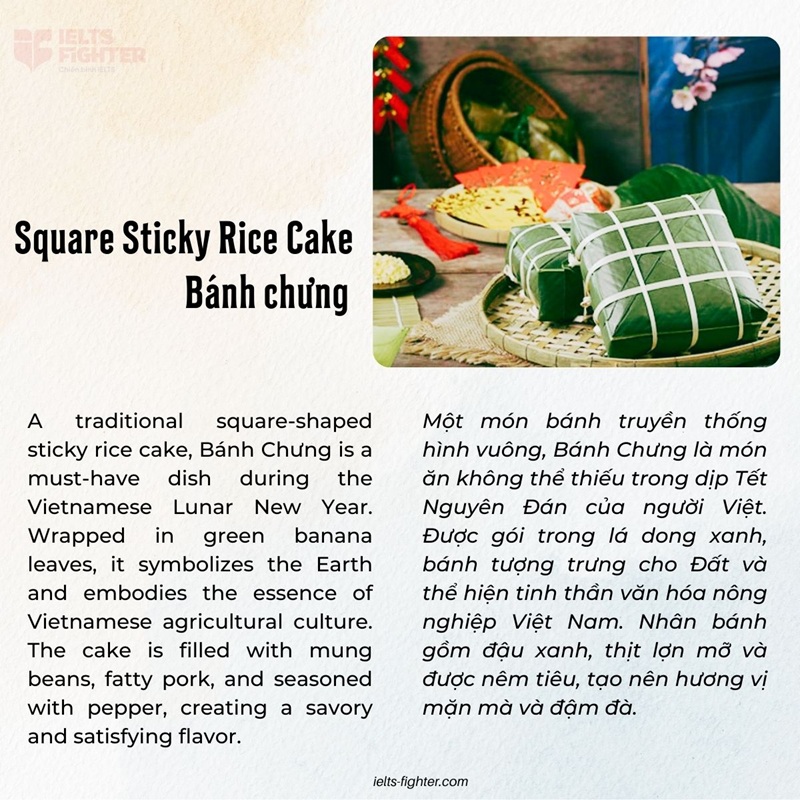
- Square Sticky Rice Cake: A traditional square-shaped sticky rice cake, Bánh Chưng is a must-have dish during the Vietnamese Lunar New Year. Wrapped in green banana leaves, it symbolizes the Earth and embodies the essence of Vietnamese agricultural culture. The cake is filled with mung beans, fatty pork, and seasoned with pepper, creating a savory and satisfying flavor.
Bánh Chưng: Một món bánh truyền thống hình vuông, Bánh Chưng là món ăn không thể thiếu trong dịp Tết Nguyên Đán của người Việt. Được gói trong lá dong xanh, bánh tượng trưng cho Đất và thể hiện tinh thần văn hóa nông nghiệp Việt Nam. Nhân bánh gồm đậu xanh, thịt lợn mỡ và được nêm tiêu, tạo nên hương vị mặn mà và đậm đà.
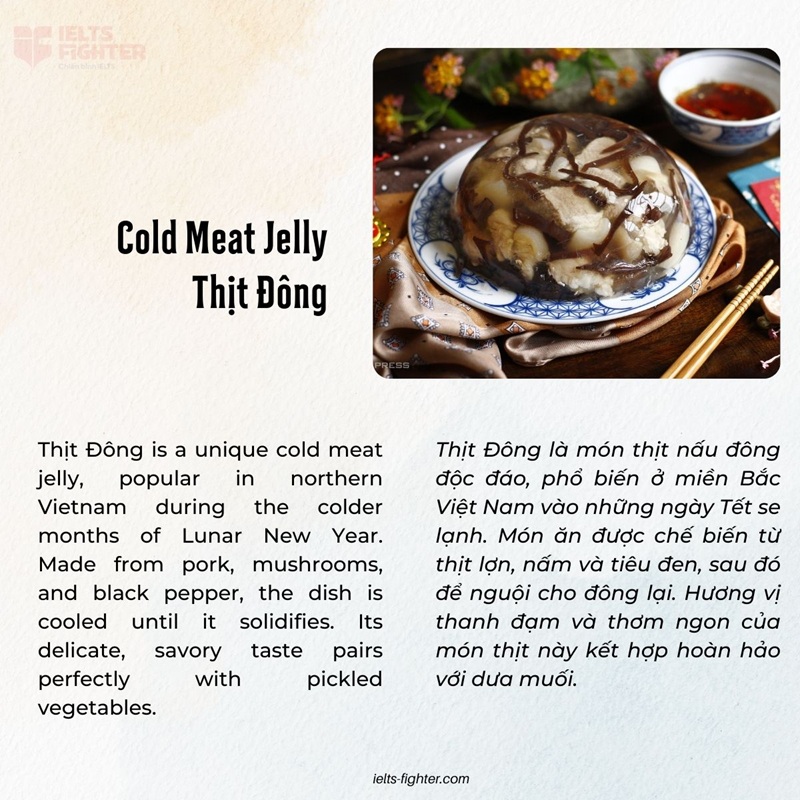
- Cold Meat Jelly: Thịt Đông is a unique cold meat jelly, popular in northern Vietnam during the colder months of Lunar New Year. Made from pork, mushrooms, and black pepper, the dish is cooled until it solidifies. Its delicate, savory taste pairs perfectly with pickled vegetables.
Thịt Đông: Thịt Đông là món thịt nấu đông độc đáo, phổ biến ở miền Bắc Việt Nam vào những ngày Tết se lạnh. Món ăn được chế biến từ thịt lợn, nấm và tiêu đen, sau đó để nguội cho đông lại. Hương vị thanh đạm và thơm ngon của món thịt này kết hợp hoàn hảo với dưa muối.
- Chicken Glass Noodle Soup with Bamboo Shoots: This comforting chicken soup features glass noodles and bamboo shoots. Miến Măng Gà is a perfect balance of chewy noodles, tender chicken, and flavorful broth. It is a hearty dish that brings warmth and nourishment during the festive season.
Miến Măng Gà: Món súp gà với miến và măng khô này mang lại cảm giác ấm áp và bổ dưỡng. Miến Măng Gà là sự hòa quyện hoàn hảo giữa miến dai, thịt gà mềm và nước dùng đậm đà. Đây là món ăn bổ dưỡng thường được dùng trong những ngày Tết.
- Pickled Onions: Dưa Hành, or pickled onions, is a tangy side dish that perfectly complements the richness of traditional Tết foods. The fermentation process gives the onions a mildly sour and crunchy texture, which balances the heavy flavors of meats and sticky rice cakes.
Dưa Hành: Dưa Hành là món ăn kèm chua chua giòn giòn, rất hợp với các món ăn đậm đà ngày Tết. Quá trình lên men tạo cho dưa hành vị chua nhẹ và độ giòn, giúp cân bằng hương vị béo ngậy của thịt và bánh chưng.
- Vietnamese Pork Sausage: Giò Lụa, or Vietnamese pork sausage, is a classic dish made by pounding lean pork and mixing it with fish sauce before steaming it in banana leaves. Its smooth, tender texture and mild flavor make it a versatile accompaniment to various dishes on the Tết table.
Giò Lụa: Giò Lụa là món chả lụa truyền thống được làm từ thịt lợn nạc giã nhuyễn và trộn với nước mắm, sau đó hấp trong lá chuối. Với kết cấu mịn màng và hương vị nhẹ nhàng, giò lụa là món ăn kèm lý tưởng trong mâm cỗ ngày Tết.
- Head Cheese: Giò Thủ is a head cheese made from pork head meat and ears, seasoned with garlic, pepper, and fish sauce before being wrapped in banana leaves. It has a chewy, flavorful texture that offers a unique contrast to softer dishes.
Giò Thủ: Giò Thủ là món giò được làm từ thịt đầu và tai heo, tẩm ướp tỏi, tiêu và nước mắm rồi gói trong lá chuối. Món ăn này có kết cấu dai giòn và hương vị đậm đà, tạo nên sự khác biệt độc đáo so với các món ăn mềm khác.
- Boiled Chicken with Lime Leaves: Boiled chicken with lime leaves is a simple yet essential dish on the Tết menu. The chicken is boiled to perfection, resulting in tender, juicy meat. Topped with aromatic lime leaves, it is served with a side of salt, pepper, and lime dip, enhancing its natural flavors.
Gà Luộc Lá Chanh: Gà luộc lá chanh là món ăn đơn giản nhưng không thể thiếu trong mâm cỗ ngày Tết. Thịt gà được luộc chín vừa tới, giữ được độ mềm mọng. Lá chanh thơm nồng được rắc lên trên, ăn kèm với muối tiêu chanh, làm nổi bật hương vị tự nhiên của món ăn.
 |
 |
MIỀN TRUNG
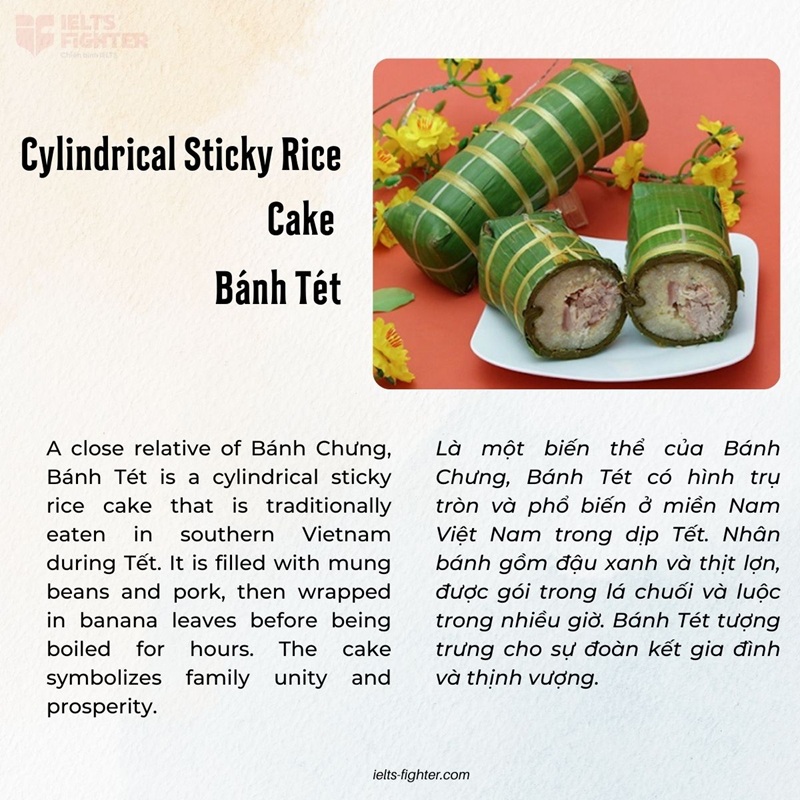
- Cylindrical Sticky Rice Cake (Bánh Tét): A close relative of Bánh Chưng, Bánh Tét is a cylindrical sticky rice cake that is traditionally eaten in southern Vietnam during Tết. It is filled with mung beans and pork, then wrapped in banana leaves before being boiled for hours. The cake symbolizes family unity and prosperity.
Bánh Tét: Là một biến thể của Bánh Chưng, Bánh Tét có hình trụ tròn và phổ biến ở miền Nam Việt Nam trong dịp Tết. Nhân bánh gồm đậu xanh và thịt lợn, được gói trong lá chuối và luộc trong nhiều giờ. Bánh Tét tượng trưng cho sự đoàn kết gia đình và thịnh vượng.
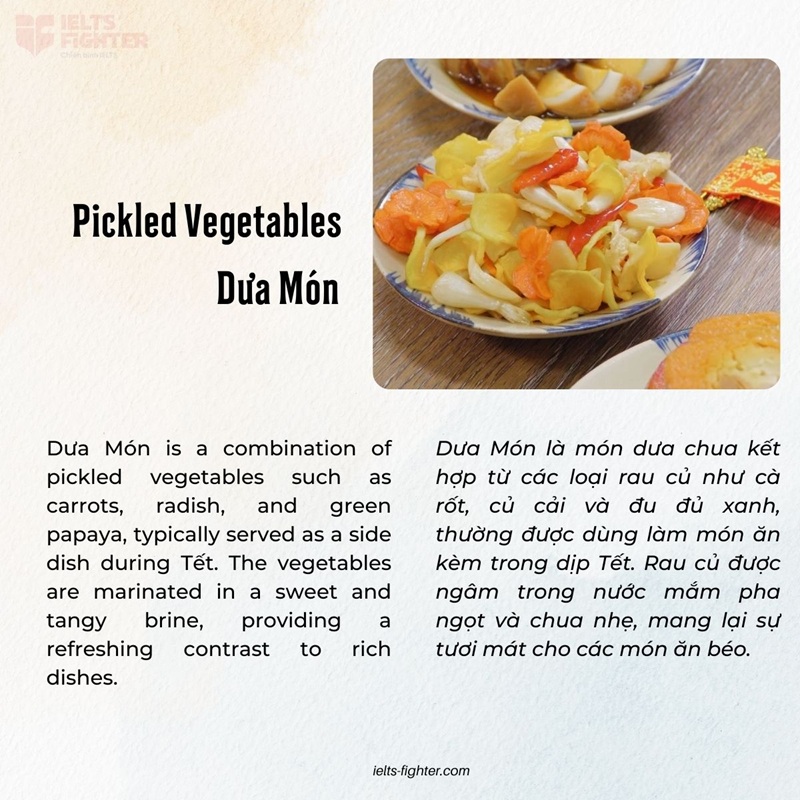
- Pickled Vegetables (Dưa Món): Dưa Món is a combination of pickled vegetables such as carrots, radish, and green papaya, typically served as a side dish during Tết. The vegetables are marinated in a sweet and tangy brine, providing a refreshing contrast to rich dishes.
Dưa Món: Dưa Món là món dưa chua kết hợp từ các loại rau củ như cà rốt, củ cải và đu đủ xanh, thường được dùng làm món ăn kèm trong dịp Tết. Rau củ được ngâm trong nước mắm pha ngọt và chua nhẹ, mang lại sự tươi mát cho các món ăn béo.
- Ginger Jam (Mứt Gừng): Mứt Gừng is a popular Tết sweet treat made from sliced ginger that is boiled and coated with sugar. The spicy kick of ginger combined with the sweetness of sugar makes it a unique and memorable snack.
Mứt Gừng: Mứt Gừng là món ăn vặt phổ biến trong dịp Tết, được làm từ gừng thái lát luộc và tẩm đường. Vị cay nhẹ của gừng kết hợp với vị ngọt của đường tạo nên món ăn đặc biệt và khó quên.
- Beef Sausage (Chả Bò): Chả Bò is a specialty from central Vietnam, made from finely pounded beef mixed with garlic and spices, then wrapped in banana leaves and steamed. It has a firm texture and rich, savory flavor.
Chả Bò: Chả Bò là đặc sản miền Trung Việt Nam, được làm từ thịt bò giã nhuyễn, tẩm tỏi và gia vị, sau đó gói trong lá chuối và hấp chín. Món ăn này có kết cấu chắc và hương vị đậm đà.
- Red Sticky Rice (Xôi Gấc): Xôi Gấc is a vibrant red sticky rice dish, made with gac fruit for its natural color and slight sweetness. It is often served at celebrations to symbolize good luck and happiness.
Xôi Gấc: Xôi Gấc là món xôi có màu đỏ rực rỡ, được làm từ quả gấc để tạo màu tự nhiên và vị ngọt nhẹ. Món này thường được dùng trong các dịp lễ để cầu may mắn và hạnh phúc.
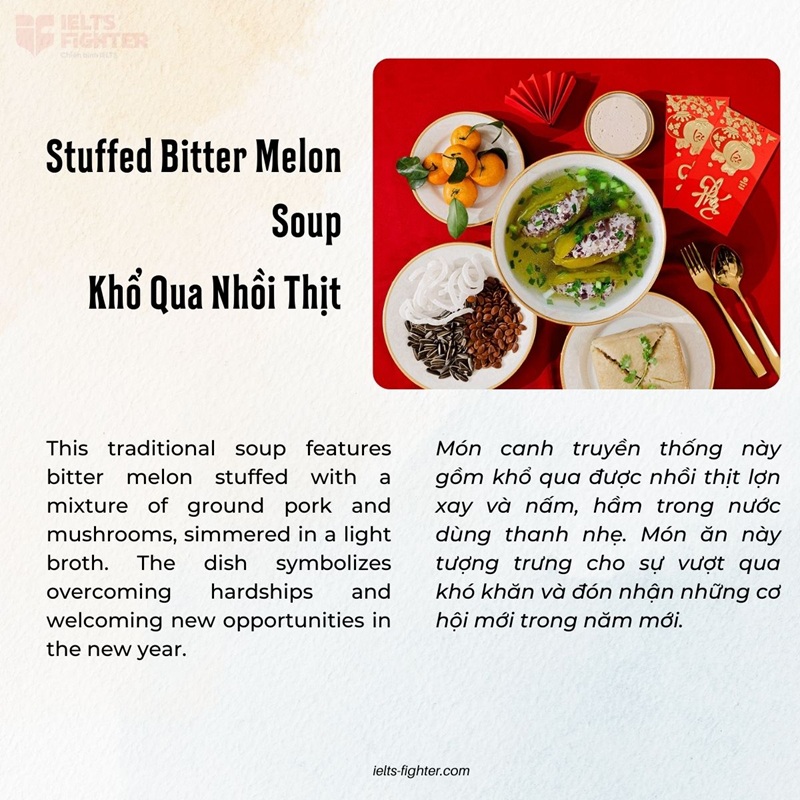
- Stuffed Bitter Melon Soup (Khổ Qua Nhồi Thịt): This traditional soup features bitter melon stuffed with a mixture of ground pork and mushrooms, simmered in a light broth. The dish symbolizes overcoming hardships and welcoming new opportunities in the new year.
Khổ Qua Nhồi Thịt: Món canh truyền thống này gồm khổ qua được nhồi thịt lợn xay và nấm, hầm trong nước dùng thanh nhẹ. Món ăn này tượng trưng cho sự vượt qua khó khăn và đón nhận những cơ hội mới trong năm mới.
 |
 |
MIỀN NAM
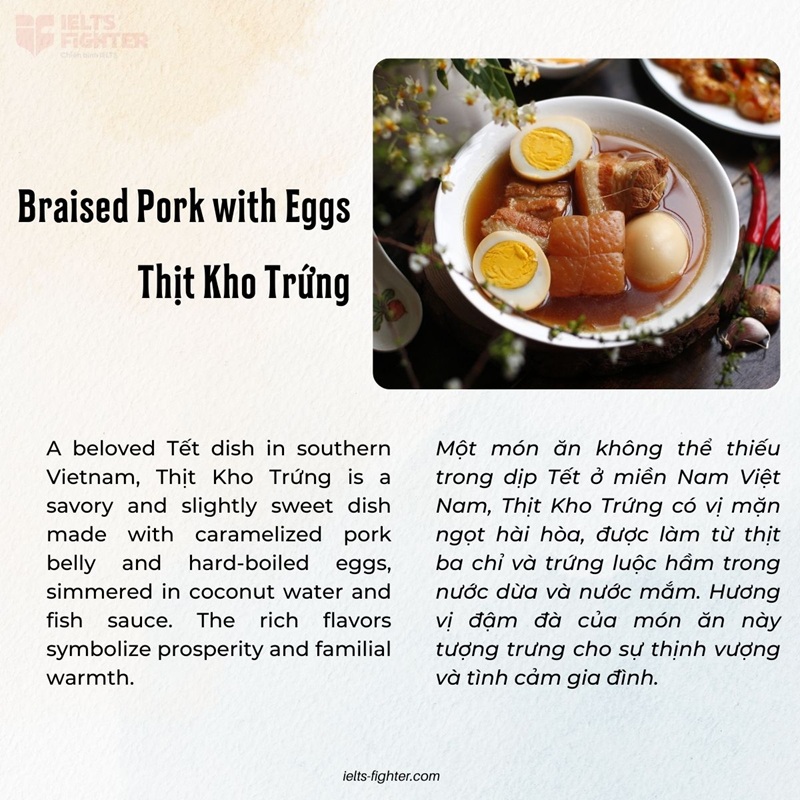
- Braised Pork with Eggs (Thịt Kho Trứng): A beloved Tết dish in southern Vietnam, Thịt Kho Trứng is a savory and slightly sweet dish made with caramelized pork belly and hard-boiled eggs, simmered in coconut water and fish sauce. The rich flavors symbolize prosperity and familial warmth.
Thịt Kho Trứng: Một món ăn không thể thiếu trong dịp Tết ở miền Nam Việt Nam, Thịt Kho Trứng có vị mặn ngọt hài hòa, được làm từ thịt ba chỉ và trứng luộc hầm trong nước dừa và nước mắm. Hương vị đậm đà của món ăn này tượng trưng cho sự thịnh vượng và tình cảm gia đình.
- Sweet and Sour Pickled Radish (Củ Cải Ngâm Chua Ngọt): This is a refreshing side dish made from pickled radishes, carrots, and chili peppers in a sweet and sour brine. It adds a crunchy texture and tangy taste that balance the richness of Tết foods.
Củ Cải Ngâm Chua Ngọt: Củ cải ngâm chua ngọt là món ăn kèm giòn giòn và chua ngọt, thường được dùng để giảm độ ngấy của các món ăn nhiều dầu mỡ trong dịp Tết.
- Fresh Spring Rolls (Gỏi Cuốn): Gỏi Cuốn, or fresh spring rolls, are a healthy and refreshing dish made with fresh herbs, rice noodles, shrimp, and pork, all wrapped in rice paper. They are served with a flavorful dipping sauce, making them a popular appetizer during the festive season.
Gỏi Cuốn: Gỏi Cuốn là món ăn nhẹ, tươi mát được làm từ các loại rau thơm, bún, tôm và thịt lợn, tất cả được cuốn trong bánh tráng. Món ăn này thường được chấm cùng nước sốt đậm đà, rất phổ biến trong các dịp lễ hội.
- Mung Bean Sticky Rice (Xôi Vò): Xôi Vò is a simple yet delicious dish made by mixing sticky rice with mashed mung beans, creating a fluffy, fragrant texture. It is a symbol of unity and is often enjoyed with sweet treats during Tết.
Xôi Vò: Xôi Vò là món xôi đơn giản nhưng ngon miệng, được làm từ gạo nếp trộn đậu xanh giã nhuyễn, tạo nên kết cấu bông xốp và thơm phức. Món này tượng trưng cho sự đoàn kết và thường được ăn kèm với các món ngọt trong dịp Tết.
- Braised Pork Offal (Phá Lấu): Phá Lấu is a flavorful dish made from pork offal braised in a rich, spiced coconut milk broth. It has a unique taste and is enjoyed as a comforting dish during celebrations.
Phá Lấu: Phá Lấu là món ăn đậm đà được làm từ nội tạng heo hầm trong nước cốt dừa và gia vị. Món ăn này có hương vị đặc trưng và thường được dùng như một món ăn ấm áp trong các dịp lễ.
- Chinese Sausage (Lạp Xưởng): Lạp Xưởng is a type of Chinese-style sausage made from pork and seasoned with rice wine, soy sauce, and sugar. Its sweet and savory flavor makes it a delicious addition to many Tết dishes.
Lạp Xưởng: Lạp Xưởng là loại xúc xích theo phong cách Trung Quốc, được làm từ thịt lợn và tẩm ướp rượu gạo, nước tương và đường. Hương vị ngọt mặn hòa quyện của món này là sự bổ sung tuyệt vời cho nhiều món ăn ngày Tết.
- Coconut Jam (Mứt Dừa): Mứt Dừa is a sweet treat made from thin strips of coconut meat cooked with sugar until it forms a chewy, caramelized texture. It is a popular Tết snack and symbolizes sweetness and joy in the new year.
Mứt Dừa: Mứt Dừa là món ăn vặt ngày Tết được làm từ những sợi dừa mỏng nấu cùng đường cho đến khi đạt độ dẻo và ngọt. Món này tượng trưng cho sự ngọt ngào và niềm vui trong năm mới.
 |
 |
Những loài hoa phổ biến dịp Tết
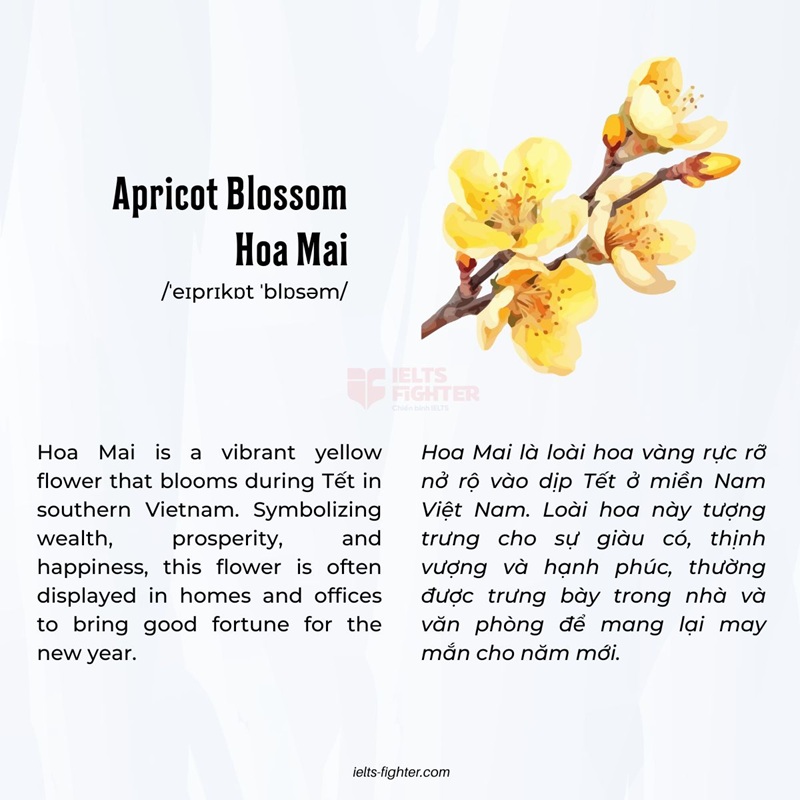
Apricot Blossom /ˈeɪ.prɪ.kɒt ˈblɒs.əm/: Hoa Mai is a vibrant yellow flower that blooms during Tết in southern Vietnam. Symbolizing wealth, prosperity, and happiness, this flower is often displayed in homes and offices to bring good fortune for the new year.
Hoa Mai: Hoa Mai là loài hoa vàng rực rỡ nở rộ vào dịp Tết ở miền Nam Việt Nam. Loài hoa này tượng trưng cho sự giàu có, thịnh vượng và hạnh phúc, thường được trưng bày trong nhà và văn phòng để mang lại may mắn cho năm mới.
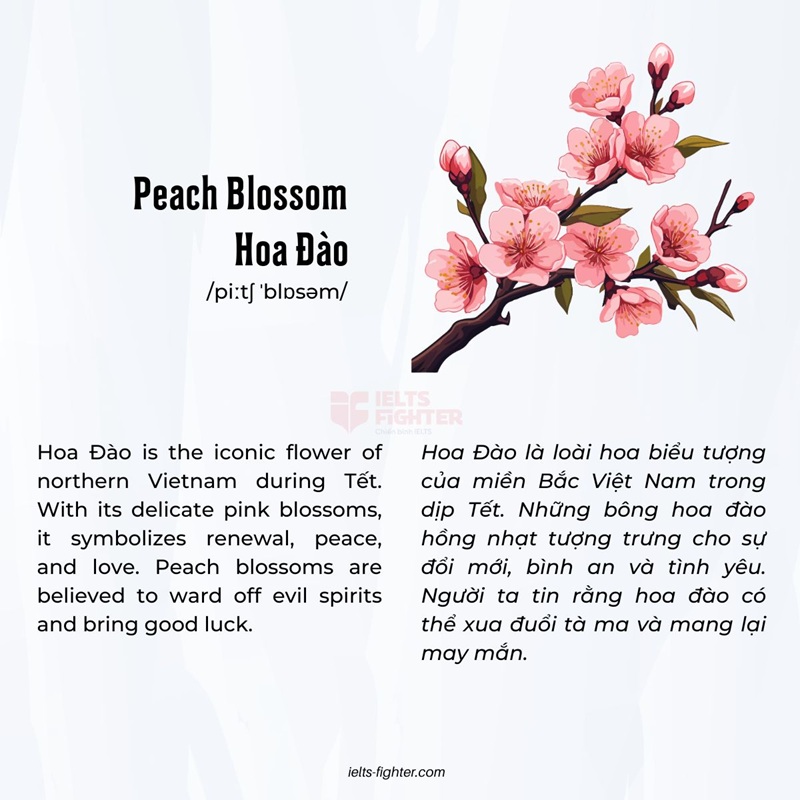
Peach Blossom /piːtʃ ˈblɒs.əm/: Hoa Đào is the iconic flower of northern Vietnam during Tết. With its delicate pink blossoms, it symbolizes renewal, peace, and love. Peach blossoms are believed to ward off evil spirits and bring good luck.
Hoa Đào: Hoa Đào là loài hoa biểu tượng của miền Bắc Việt Nam trong dịp Tết. Những bông hoa đào hồng nhạt tượng trưng cho sự đổi mới, bình an và tình yêu. Người ta tin rằng hoa đào có thể xua đuổi tà ma và mang lại may mắn.
Lily /ˈlɪl.i/: Hoa Ly, or lily, is a fragrant flower that represents elegance and purity. During Tết, lilies are often used to decorate homes, symbolizing prosperity and happiness for the coming year.
Hoa Ly: Hoa Ly là loài hoa có hương thơm ngát, tượng trưng cho sự thanh tao và thuần khiết. Trong dịp Tết, hoa ly thường được dùng để trang trí nhà cửa, mang ý nghĩa cầu mong sự thịnh vượng và hạnh phúc trong năm mới.
Eustoma /ˈjuː.stə.mə/: Eustoma flowers are known for their soft, bell-shaped petals. They are a symbol of good luck and well-being, making them a popular choice for Tết decorations to wish for a prosperous year.
Hoa Cát Tường: Hoa Cát Tường có cánh hoa mềm mại và hình dáng như chiếc chuông nhỏ. Loài hoa này biểu tượng cho sự may mắn và an khang, là lựa chọn phổ biến để trang trí Tết với mong muốn một năm mới thịnh vượng.
Camellia /kəˈmiː.li.ə/: Camellia flowers, with their striking red petals, symbolize wealth and success. They are often displayed in homes during Tết as a wish for a successful and prosperous year.
Hoa Hải Đường: Hoa Hải Đường có những cánh hoa đỏ rực rỡ, tượng trưng cho sự giàu sang và thành công. Hoa thường được trưng bày trong nhà vào dịp Tết với mong muốn một năm mới thành đạt và thịnh vượng.
Pussy Willow /ˈpʊs.i ˈwɪl.oʊ/: Pussy Willow branches are a popular Tết decoration. The buds represent new growth and prosperity. They are often displayed in vases as a symbol of vitality and renewal.
Nụ Tầm Xuân: Nụ Tầm Xuân là cành hoa trang trí phổ biến trong dịp Tết. Những chồi non tượng trưng cho sự phát triển mới và thịnh vượng. Chúng thường được cắm vào bình để biểu thị sự sống và đổi mới.
Chrysanthemum /krɪˈsæn.θə.məm/: Chrysanthemums are a common sight during Tết. Their bright yellow flowers symbolize longevity, prosperity, and happiness. They are often placed at home entrances to welcome guests.
Hoa Cúc Mâm Xôi: Hoa Cúc Mâm Xôi là loài hoa phổ biến vào dịp Tết. Những bông hoa vàng rực rỡ tượng trưng cho sự trường thọ, thịnh vượng và hạnh phúc. Hoa thường được đặt trước cửa nhà để chào đón khách.
Gerbera Daisy /ˈɡɜː.bər.ə/: Gerbera daisies are known for their vibrant colors and are believed to bring wealth and good fortune. They are often displayed in homes during Tết to wish for financial success.
Hoa Đồng Tiền: Hoa Đồng Tiền nổi bật với màu sắc rực rỡ và được cho là mang lại sự giàu có và may mắn. Hoa thường được trưng bày trong nhà vào dịp Tết để cầu mong thành công về tài chính.
Phalaenopsis Orchid /ˌfæ.liˈnɒp.sɪs ˈɔː.kɪd/: Phalaenopsis orchids are elegant flowers that symbolize luxury, grace, and prosperity. During Tết, they are often used as decorations to bring sophistication and good luck.
Hoa Lan Hồ Điệp: Hoa Lan Hồ Điệp là loài hoa thanh tao, biểu tượng cho sự sang trọng, duyên dáng và thịnh vượng. Trong dịp Tết, chúng thường được dùng để trang trí, mang lại sự tinh tế và may mắn.
 |
 |
Phong tục tập quán ngày Tết
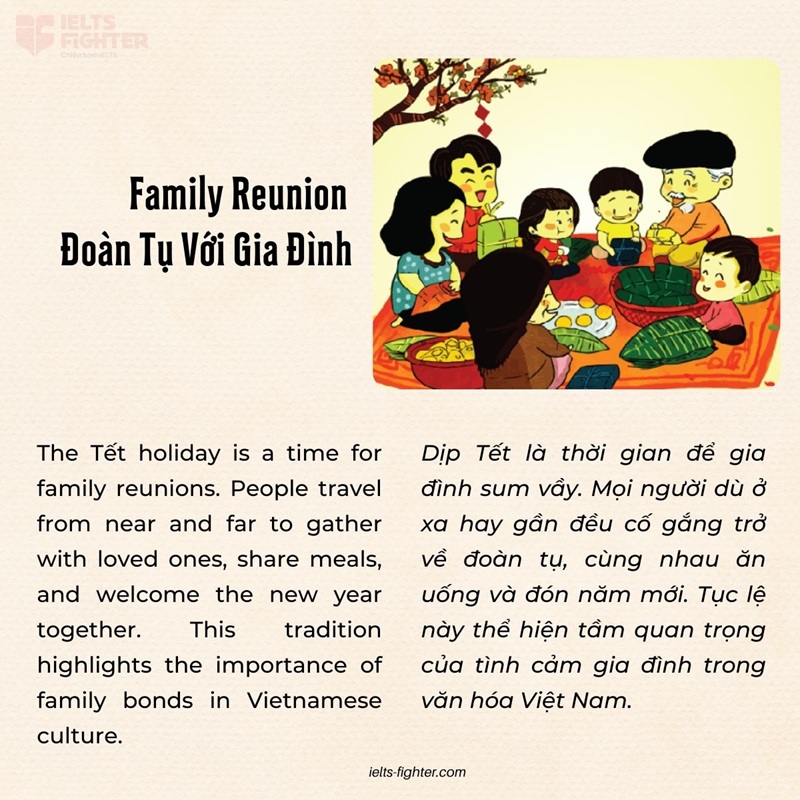
Family Reunion (Đoàn Tụ Với Gia Đình): The Tết holiday is a time for family reunions. People travel from near and far to gather with loved ones, share meals, and welcome the new year together. This tradition highlights the importance of family bonds in Vietnamese culture.
Đoàn Tụ Với Gia Đình: Dịp Tết là thời gian để gia đình sum vầy. Mọi người dù ở xa hay gần đều cố gắng trở về đoàn tụ, cùng nhau ăn uống và đón năm mới. Tục lệ này thể hiện tầm quan trọng của tình cảm gia đình trong văn hóa Việt Nam.
Kitchen Gods Worship (Cúng Ông Công, Ông Táo): This ritual is performed a few days before Tết to honor the Kitchen Gods, who are believed to report the household’s activities to the Jade Emperor. Offerings include fruits, incense, and paper effigies.
Cúng Ông Công, Ông Táo: Tục lệ này được thực hiện vài ngày trước Tết để tiễn Ông Công, Ông Táo về trời báo cáo những việc trong năm của gia đình. Lễ vật gồm hoa quả, nhang và vàng mã.
Visiting Ancestors' Graves (Đi Thăm Mộ Của Tổ Tiên): Before Tết, families visit and clean the graves of their ancestors to pay respect. This practice symbolizes gratitude and a connection between the living and the deceased.
Đi Thăm Mộ Của Tổ Tiên: Trước dịp Tết, các gia đình đi viếng và dọn dẹp mộ của tổ tiên để bày tỏ lòng kính trọng. Tục lệ này tượng trưng cho lòng biết ơn và sự kết nối giữa người sống và người đã khuất.
Making and Cooking Sticky Rice Cakes (Gói Và Nấu Bánh Chưng/Bánh Tét): Families gather to prepare and cook Bánh Chưng or Bánh Tét, traditional sticky rice cakes. This activity fosters a sense of togetherness and preserves cultural traditions.
Gói Và Nấu Bánh Chưng/Bánh Tét: Các gia đình cùng nhau gói và nấu bánh chưng hoặc bánh tét – những món bánh truyền thống. Hoạt động này tăng cường tình cảm gắn kết và giữ gìn truyền thống văn hóa.
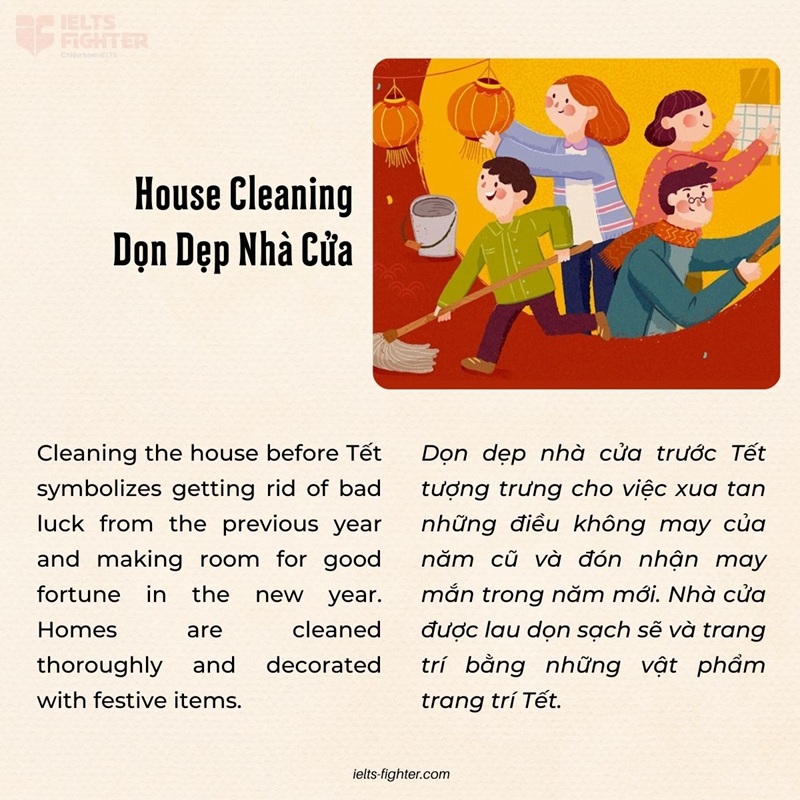
House Cleaning (Dọn Dẹp Nhà Cửa): Cleaning the house before Tết symbolizes getting rid of bad luck from the previous year and making room for good fortune in the new year. Homes are cleaned thoroughly and decorated with festive items.
Dọn Dẹp Nhà Cửa: Dọn dẹp nhà cửa trước Tết tượng trưng cho việc xua tan những điều không may của năm cũ và đón nhận may mắn trong năm mới. Nhà cửa được lau dọn sạch sẽ và trang trí bằng những vật phẩm trang trí Tết.
New Year’s Eve Celebration (Đón Giao Thừa): The transition from the old year to the new year is marked by a special ceremony called Giao Thừa. Families gather to offer prayers and make wishes for the coming year.
Đón Giao Thừa: Khoảnh khắc chuyển giao từ năm cũ sang năm mới được đánh dấu bằng nghi lễ đặc biệt gọi là Giao Thừa. Các gia đình tụ họp, thắp hương và cầu mong những điều tốt lành cho năm mới.
Displaying Five-Fruit Tray (Chưng Mâm Ngũ Quả): The five-fruit tray is a symbolic Tết decoration representing the family's wishes for prosperity, health, and longevity. Each fruit carries a unique meaning and is carefully chosen.
Chưng Mâm Ngũ Quả: Mâm ngũ quả là vật phẩm trang trí Tết mang tính biểu tượng, đại diện cho những mong ước về sự thịnh vượng, sức khỏe và trường thọ của gia đình. Mỗi loại quả mang một ý nghĩa riêng và được lựa chọn kỹ lưỡng.
Flower Arrangement (Chơi Hoa Vào Dịp Tết): Decorating homes with flowers during Tết is a long-standing tradition. Flowers like apricot blossoms, peach blossoms, and chrysanthemums are chosen for their symbolic meanings of luck, prosperity, and happiness.
Chơi Hoa Vào Dịp Tết: Trang trí nhà cửa bằng hoa trong dịp Tết là truyền thống lâu đời. Các loại hoa như hoa mai, hoa đào và hoa cúc được chọn vì ý nghĩa biểu tượng của chúng về sự may mắn, thịnh vượng và hạnh phúc.
First Footing (Xông Đất): In Vietnamese tradition, the first person to enter a house on the first day of the Lunar New Year is believed to bring good luck and prosperity for the year ahead. Families carefully choose someone with a positive aura and successful life to be the first visitor.
Xông Đất: Trong truyền thống Việt Nam, người đầu tiên bước vào nhà vào ngày đầu năm mới được cho là sẽ mang lại may mắn và thịnh vượng cho cả năm. Gia đình thường chọn người có vận khí tốt và thành công để làm người xông đất.
New Year’s Greetings and Lucky Money (Chúc Tết, Mừng Tuổi và Lì Xì): It is customary to offer New Year’s greetings to family and friends during Tết. Adults give children red envelopes containing money, known as lì xì, as a wish for prosperity and good fortune.
Chúc Tết, Mừng Tuổi và Lì Xì: Vào dịp Tết, người Việt thường gửi lời chúc tốt đẹp đến gia đình và bạn bè. Người lớn trao lì xì – những phong bao đỏ đựng tiền – cho trẻ nhỏ như một lời chúc may mắn và thịnh vượng.
Visiting Pagodas and Picking Fortune Buds (Đi Chùa, Hái Lộc Đầu Năm): Visiting pagodas to pray for blessings is a significant Tết tradition. People also pick young buds from trees, symbolizing the hope for a prosperous and fresh start to the new year.
Đi Chùa, Hái Lộc Đầu Năm: Đi chùa cầu phúc là một phong tục quan trọng trong dịp Tết. Người ta hái lộc – những chồi non từ cây – để cầu mong sự khởi đầu thuận lợi và thịnh vượng trong năm mới.
Year-End Offering (Cúng Tất Niên): The Tất Niên ceremony marks the end of the year. Families offer food and incense to their ancestors to express gratitude for the past year and invite them to celebrate the new year together.
Cúng Tất Niên: Lễ cúng tất niên đánh dấu kết thúc năm cũ. Các gia đình dâng mâm cỗ và thắp hương để tỏ lòng biết ơn tổ tiên và mời họ cùng đón năm mới.
Requesting Calligraphy (Xin Chữ Dịp Đầu Xuân): During Tết, people often ask calligraphy masters to write auspicious characters on red paper. These calligraphy pieces are displayed in homes to bring luck and prosperity.
Xin Chữ Dịp Đầu Xuân: Vào dịp Tết, người ta thường xin chữ từ các ông đồ. Những chữ viết mang ý nghĩa tốt lành được treo trong nhà để cầu may mắn và thịnh vượng.
First Writing of the Year (Khai Bút Đầu Năm): Khai bút is a meaningful tradition for students, scholars, and writers. They write meaningful sentences or characters at the beginning of the year as a symbolic act to inspire learning and success throughout the year.
Khai Bút Đầu Năm: Khai bút là phong tục ý nghĩa dành cho học sinh, học giả và những người viết lách. Họ viết những câu chữ ý nghĩa vào đầu năm như một biểu tượng khơi dậy tinh thần học tập và thành công suốt cả năm.
 |
 |
IELTS Speaking - Tet Holiday
Speaking Part 2
Các đề bài hay gặp về chủ đề ngày lễ hội như Describe your favourite holiday, What is the most important festival in your country hay An important holiday hoặc Describe an interesting tradition in your country thì các bạn cũng đều có thể nói về ngày Tết nha.
Chuỗi livestream về chủ đề Tết được thực hiện trong group IELTS Fighter - Hỗ trợ học tập, phân tích rõ ở đây với giáo viên chuyên môn đây nhé: https://www.facebook.com/groups/548675179456397/
Bản pdf tài liệu chuỗi live: TẠI ĐÂY
Chúng ta có các bài mẫu và từ vựng hay chủ đề Tet Holiday mà các bạn có thể tham khảo dưới đây nhé.
What is the most important festival in your country?
The extremely important event to all Vietnamese families must be The Vietnamese New Year or Tet.
One of the most indispensable festivals in my country as well as other Asian countries is Tet, or we call it Lunar New Year Festival. It has significant meaning as it’s the moment when the old year is over and the new year is celebrated.
The fireworks start on New Year's Eve and many Vietnamese people, especially the younger generations tend to flock to some popular locations like Nguyen Hue Walking Street to watch these and celebrate the beginning of a brand-new year.
According to tradition, first-footing on New Year's Eve is deemed crucial as this can influence the new year's fortune. Vietnamese people often wish each other peace, health, luck and prosperity for the upcoming year. It’s the quality time to spend with our nearest and dearest that makes Tet so special and unique.
It’s more like a time for reunions, a moment to reflect what's happened and prepare for the fresh start , and most importantly, an occasion to enjoy ourselves, recharge our batteries as well as cherish the most valuable things in life.
Từ vựng hay:
Indispensable /ɪndɪˈspensəbl/: Không thể thiếu
Has significant meaning /həz sɪɡˈnɪfɪkənt ˈmiːnɪŋ/: Có ý nghĩa đặc biệt
Flock to /flɒk tə/: Đổ xô tới
First-footing /ˌfɜːst ˈfʊtɪŋ/: Xông đất
Fortune/ˈfɔːtʃuːn/: Của cải
Prosperity/prɒˈsperəti/: Sự giàu cỏ
Recharge our batteries /ˌriːˈtʃɑːdʒ ɑː(r) ˈbætri/: Hồi phục lại năng lượng
Quality time/ˈkwɒləti taɪm/: Thời gian quý báu
Cherish/ˈtʃerɪʃ/: Trân trọng.
Describe an interesting tradition in your country.
Vietnam is well-known for having rich traditions so there are a number of interesting practices that I can think of off the top of my head. There’s one in particular that I think is really intriguing and strange at the same time which is ‘’burning fake money’’ tradition and I can’t wait to share with you in details.
From my knowledge, the custom of burning fake money is deeply rooted in East Asian culture, especially in China and Vietnam for thousands of years. It often occurs on the 1st and 15th of every month based on the lunar calendar. These rituals are also performed on the death anniversaries and funerals of loved ones throughout the years and it is especially grand during the Tet holiday.
Asians in general and especially Vietnamese follow this tradition in a very serious way. We believe this is an essential way to show respect to the dead and wishing our ancestors to start their new year with plenty of money in their spiritual bank.
Alongside fake money, Vietnamese people also burn away various types of paper models like multi-storey houses, motorbikes, servants and and other valuable items.
All in all, this practice has become an important part of our culture and I’m sure it won’t die away easily. With that being said, I think we should treat our close family wholeheartedly when they’re still alive rather than burning fake things to them once they’ve passed away.
Từ vựng nổi bật:
Burn fake money /bɜːn feɪk ˈmʌni/: Hóa vàng
On the top of one’s head: Bật nhớ trong đầu
Intriguing /ɪnˈtriːɡɪŋ/: Thú vị
Deeply rooted /ˈdiːpli ˈruːtɪd/: Bắt nguồn từ
Ritual/ˈrɪtʃuəl/: Nghi lễ, nghi thức
Death anniversary /deθ ˌænɪˈvɜːsəri/: Ngày giỗ
An essential way of showing respect: Cách để bày tỏ lòng kính trọng
The dead: Người đã mất
Paper model /ˌpeɪpə ˈmɒdl/: Đồ vàng mã
Wholeheartedly/ˌhəʊlˈhɑːtɪdli/: Bằng cả tấm lòng
Bên cạnh đó còn 3 bài mẫu theo kiểu đề Describe an important holiday that is celebrated in your country mà bạn có thể tham khảo qua link này nhé: An important holiday
Speaking part 3
Trên đây là từ vựng hay kèm với bài mẫu Speaking part 2-3 giới thiệu ngày Tết bằng tiếng Anh, các bạn cùng tham khảo để nâng cao vốn từ, cách trả lời ghi điểm nhé!
Bài viết do đội ngũ học thuật IELTS Fighter thực hiện, vui lòng ghi nguồn khi chia sẻ nhé!