
IELTS Writing Task 1 Horse Evolution Sample
Hôm nay chúng ta đến với một đề IELTS Writing Task 1 khó, làm nhiều bạn rớt nước mắt nếu lỡ gặp phải, đó là đề con ngựa huyền thoại nhé.
Bài viết thực hiện bởi đội ngũ học thuật IELTS Fighter, vui lòng ghi nguồn nếu chia sẻ nha.
Đề bài Horse Evolution
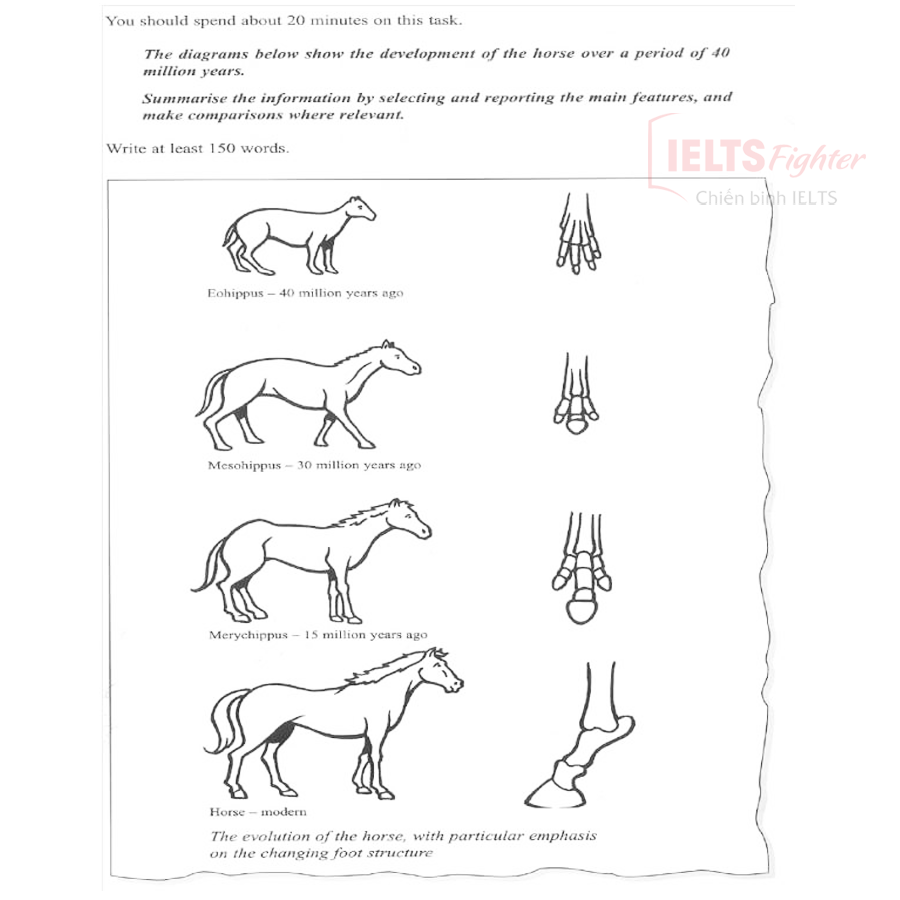
The diagrams below show the development of the horse over a period of 40 million years. Summarise the information by selecting and reporting the main features, and make comparisons where relevant.
Từ vựng quan trọng
- evolutionary progression /ˌevəˈluʃəˌneri prəˈɡreʃən/ (n phr) : quá trình tiến hóa
- particular emphasis on /pərˈtɪkjələr ˈemfəsɪs ɑn/ (n phr) : sự nhấn mạnh đặc biệt vào
- transformation /ˌtrænsfərˈmeɪʃən/ (n) : sự biến đổi
- foot structure /fʊt ˈstrʌktʃər/ (n phr) : cấu trúc bàn chân
- undergo /ˌʌndərˈɡoʊ/ (v) : trải qua
- substantial changes /səbˈstænʃəl ˈʧeɪndʒɪz/ (n phr) : những thay đổi đáng kể
- posture /ˈpɑsʧər/ (n) : tư thế
- limb structure /lɪm ˈstrʌktʃər/ (n phr) : cấu trúc chi
- distinctive feature /dɪˈstɪŋktɪv ˈfiʧər/ (n phr) : đặc điểm nổi bật
- represented by /ˌreprɪˈzentɪd baɪ/ (v phr) : được đại diện bởi
- distinct toes /dɪˈstɪŋkt toʊz/ (n phr) : các ngón chân riêng biệt
- pronounced /prəˈnaʊnst/ (adj) : rõ hơn, nổi bật hơn
- indicating an adaptation /ˈɪndəˌkeɪtɪŋ ən ˌædæpˈteɪʃən/ (v phr) : cho thấy sự thích nghi
- emerged /ɪˈmɜrdʒd/ (v) : xuất hiện
- resembled /rɪˈzembəld/ (v) : giống với
- central toe /ˈsentrəl toʊ/ (n phr) : ngón chân giữa
- efficient movement /ɪˈfɪʃənt ˈmuvmənt/ (n phr) : sự di chuyển hiệu quả
- musculature /ˈmʌskjələˌʧʊr/ (n) : hệ cơ
- well-suited for /ˌwel ˈsutɪd fɔr/ (adj phr) : rất phù hợp với
- lineage /ˈlɪniɪʤ/ (n) : dòng dõi tiến hóa
- reduction in /rɪˈdʌkʃən ɪn/ (n phr) : sự giảm bớt
- elongation /iˌlɔŋˈɡeɪʃən/ (n) : sự kéo dài
- muzzle /ˈmʌzəl/ (n) : mõm
- equipped with /ɪˈkwɪpt wɪð/ (v phr) : được trang bị với
- milestone /ˈmaɪlˌstoʊn/ (n) : cột mốc
Phân tích viết bài và bài mẫu
Bài mẫu 1:
| Introduction | Introduce the diagram and explain that it depicts the evolution of the horse over 40 million years, focusing on the changes in foot structure. |
| Overview | Summarize the overall evolutionary trend, highlighting how the size and structure of the horse and its foot have transformed over time. |
| Body Paragraph 1 | Describe the earlier stages of evolution (Eohippus and Mesohippus), including the size and foot structure. |
| Body Paragraph 2 | Detail the later stages (Merychippus and the modern horse) and emphasize the significant changes in both physical appearance and foot adaptation. |
Sample
The diagram illustrates the evolutionary progression of the horse over 40 million years, with a particular emphasis on the transformation of its foot structure.
Overall, the horse has undergone substantial changes in size, posture, and limb structure. Initially, it was a small, dog-like animal with multiple toes. Over time, it grew larger and developed a single-toed hoof, which is a distinctive feature of the modern horse.
In the earliest stage, 40 million years ago, the horse was represented by Eohippus. This species was small in size and had four distinct toes, which were spread out to support movement on soft ground. By 30 million years ago, Eohippus evolved into Mesohippus, which was larger and had three toes. The middle toe was slightly more pronounced, indicating an adaptation toward walking on harder surfaces.
Fifteen million years ago, Merychippus emerged. This species was significantly larger and resembled the modern horse more closely in terms of body shape. Its legs had three toes, but the central toe was much more developed, suggesting a shift toward more efficient movement on open grasslands. Finally, the modern horse has a single large hoof, which is perfectly adapted for running on firm ground. Along with its hoof, its size and musculature have increased, making it well-suited for its current environment.
Biểu đồ minh họa sự tiến hóa của loài ngựa trong 40 triệu năm qua, tập trung đặc biệt vào sự biến đổi của cấu trúc bàn chân.
Nhìn chung, loài ngựa đã trải qua những thay đổi đáng kể về kích thước, tư thế và cấu trúc chi. Ban đầu, nó là một loài động vật nhỏ giống chó với nhiều ngón chân. Qua thời gian, loài ngựa trở nên lớn hơn và phát triển móng guốc đơn lẻ, đây là đặc điểm nổi bật của ngựa hiện đại.
Ở giai đoạn sớm nhất, cách đây 40 triệu năm, loài ngựa được đại diện bởi Eohippus. Loài này có kích thước nhỏ và bốn ngón chân riêng biệt, được sắp xếp để hỗ trợ di chuyển trên mặt đất mềm. Đến 30 triệu năm trước, Eohippus tiến hóa thành Mesohippus, lớn hơn và có ba ngón chân. Ngón chân giữa nổi bật hơn một chút, cho thấy sự thích nghi với việc đi lại trên mặt đất cứng hơn.
Cách đây 15 triệu năm, Merychippus xuất hiện. Loài này lớn hơn đáng kể và có hình dáng giống ngựa hiện đại hơn về mặt cơ thể. Chân của nó có ba ngón, nhưng ngón giữa phát triển rõ rệt, cho thấy sự chuyển đổi sang việc di chuyển hiệu quả hơn trên đồng cỏ mở. Cuối cùng, ngựa hiện đại có một móng guốc lớn, hoàn hảo để chạy trên mặt đất cứng. Cùng với móng guốc, kích thước và cơ bắp của nó đã tăng lên, giúp nó thích nghi tốt với môi trường hiện tại.
Bài mẫu 2:
The diagram illustrates the evolution of the horse, occurring over a geologic time scale of 40 million years, transforming small-sized Eohippus into the modern horse.
Overall, the lineage leading from Eohippus to the modern-day horse exhibits some evolutionary trends, including increase in size, reduction in the number of hooves, lengthening of the legs, and elongation of the muzzle.
About 40 MYA, with a relatively short head and neck, Eohippus developed five toes, of which four were equipped with small hooves, while the fifth was off the ground. Living about 30 MYA, as an intermediate between the Eohippus-like horses and more “modern” horses, Mesohippus was slightly larger and leggier, and walked on three toes.
By 15 MYA, Mesohippus had evolved into a somewhat larger form known as Merychippus, representing a milestone in the evolution of horses. Though it retained the primitive character of 3 toes, it looked like a modern horse, with a long face and a newly-developed mane. Finally, the modern-day horse evolving from Merychippus now has a single hoof, slender legs, along head, a relatively long neck, and a long tail.
(183 words)
Biểu đồ minh họa sự tiến hóa của loài ngựa, diễn ra trong quy mô thời gian địa chất là 40 triệu năm, biến Eohippus có kích thước nhỏ thành loài ngựa hiện đại.
Nhìn chung, dòng dõi từ Eohippus đến ngựa ngày nay thể hiện một số xu hướng tiến hóa, bao gồm tăng kích thước, giảm số lượng móng guốc, kéo dài chân và dài mõm.
Khoảng 40 triệu năm trước, với phần đầu và cổ tương đối ngắn, Eohippus đã phát triển 5 ngón chân, trong đó 4 ngón được trang bị móng guốc nhỏ, còn ngón thứ 5 không chạm đất. Sống khoảng 30 triệu năm trước, là vật trung gian giữa loài ngựa Eohippus và những con ngựa "hiện đại" hơn, Mesohippus lớn hơn và cao hơn một chút, và đi bằng ba ngón chân.
Đến năm 15 triệu năm trước, Mesohippus đã tiến hóa thành một dạng lớn hơn một chút được gọi là Merychippus, đại diện cho một cột mốc quan trọng trong sự tiến hóa của loài ngựa. Mặc dù vẫn giữ đặc điểm nguyên thủy là 3 ngón chân, nhưng nó trông giống một con ngựa hiện đại với khuôn mặt dài và bờm mới phát triển. Cuối cùng, loài ngựa hiện đại tiến hóa từ Merychippus giờ có một móng đơn, chân thon, đầu dài, cổ tương đối dài và đuôi dài.
Dạng đề diagram mới chủ đề về sự tiến hóa của loài ngựa ban đầu sẽ thấy khá khó nhưng nếu tập trung phân tích sẽ nhanh chóng viết được ổn thôi, các bạn cùng luyện chăm nhé.
Xem thêm: IELTS Writing Task 2 chủ đề Technology