
Hướng dẫn viết và bài mẫu Writing Task 1 Process: Apple juice, Geothermal, Hydroelectric, A lead pencil, Olive oil
Bài học hôm nay bao gồm bài viết và video dưới sự hướng dẫn của Mr James với các đề Writing Process khó nhằn trong những năm qua. Các bạn cùng tham khảo học nhé.
Chi tiết cách viết bài bạn xem ở đây: Cách viết IELTS Writing Task 1 Process
Writing Process: Apple juice
The diagram below shows how concentrated apple juice is produced.
Summarize the information by selecting and reporting the main features and make comparisons where relevant.
Write at least 150 words.
Brainstorming
- Overview:
Steps 1 - 4: preparing the ingredient
Steps 5 - 8: main parts, complicated technologies
Steps 9 - 11: packing and distribution
- Body:
Body 1: steps 1 - 4
Body 2: steps 5 - 8
Body 3: steps 9 - 11
Bài mẫu
The provided diagram illustrates how the process of producing apple juice takes places.
In general, this process includes 11 steps in which the first four steps involve preparing the ingredient, the next four steps are the main parts with complicated technologies, and the last 3 steps include packaging and distribution.
Specifically, the preparatory stage begins with harvesting and selecting the best apples from the trees. After going through an automatic belt and being washed and sorted at step 2, the apples are sliced in an apple grinder at step 3. Next, the apple slices are stored in a wooden bucket.
At stage 5, the apple slices are put into a pressing machine where water is separated from the apple by a centrifuge. Afterwards, the apple goes through a system of boilers and pipes where aroma is added. Steps 7 and 8 involve filtration and pasteurization at 80 degrees Celsius respectively.
At step 9, the apple juice is poured into bottles which are previously labeled. At the two final steps, the bottles are packed into cardboard boxes before being delivered by lorries, and the process finishes at this step. (188 words, band 7.0)
Vocabulary highlights
| preparation | /ˌprepəˈreɪʃən/ | (n) | sự chuẩn bị |
| preparatory | /prɪˈpærəˌtɔri/ | (adj) | mang tính chất chuẩn bị |
| slice | /slaɪs/ | (v) | thái lát mỏng |
| slice | /slaɪs/ | (n) | 1 lát cắt |
| bucket | /ˈbʌkɪt/ | (n) | cái xô |
| centrifuge | /ˈsentrɪˌfjuʤ/ | (n) | máy ly tâm |
| boiler | /ˈbɔɪlər/ | (n) | nồi hơi |
| pipe | /paɪp/ | (n) | ống dẫn |
| filtration | /fɪlˈtreɪʃən/ | (n) | quá trình lọc |
| filter | /ˈfɪltər/ | (v) | lọc |
| pasteurization | /ˌpæsʧərəˈzeɪʃən/ | (n) | sát khuẩn |
| label | /ˈleɪbəl/ | (v) | dán nhãn |
| label | /ˈleɪbəl/ | (n) | nhãn mác của sản phẩm |
| cardboard | /ˈkɑrdbɔrd/ | (n) | bìa |
| deliver | /dɪˈlɪvər/ | (v) | vận chuyển |
| transport | /trænˈspɔrt/ | (v) | vận chuyển |
| lorry | /ˈlɔri/ | (n) | xe tải |
| truck | /trʌk/ | (n) | xe tải |
Steps 7 and 8 involve filtration and pasteurization at 80 degrees Celsius respectively.
The first step in the process involves harvesting and selecting the best apples.
Subject: 1 hoặc 1 số các bước nào đó trong quy trình
Verb: involve / include
Objects: cụm V hoặc cụm N.
Writing Process: Geothermal
The diagram below shows how geothermal energy is used to produce electricity.
Brainstorming
- Overview: movement and heating of water: absorb geothermal energy => convert into electrical energy
- Body 1: movement of water to absorb geothermal energy
- Body 2: conversion into electrical energy
Full sample
The provided diagram illustrates how the process of generating electricity in a geothermal power plant happens.
Overall, this process includes 6 steps in which the movement and heating of water plays an essential role. Water absorbs geothermal energy and converts it into electrical energy.
Specifically about the movement of water to absorb geothermal energy, the process commences when cold water from a tank on the surface is pumped to the depth of 4.5 km underground. Then, the water goes through an injection well into a geothermal zone where it absorbs heat energy from hot rocks. At the third step, after receiving sufficient geothermal energy, boiling water is pumped upward back to the surface through a production well.
In terms of energy conversion, on the surface, boiling water is stored in a condenser. The higher the temperature, the higher the pressure, so high-pressure steam created in the boiling process is released from the condenser to turn the turbines. Then, a generator which is powered by the turbines produces electricity. Finally, electrical power is transmitted into the national grid, and the process finishes. (182 words, band 7.0)
Vocabulary highlights
| geothermal power plant | /ˌdʒi.oʊˈθɜr.məl ˈpaʊ.ər plænt/ | (n phr) | nhà máy điện địa nhiệt |
| geothermal energy | /ˌdʒi.oʊˈθɜr.məl ˈen.ər.dʒi/ | (n phr) | năng lượng địa nhiệt |
| heat energy | /hiːt ˈen.ər.dʒi/ | (n phr) | nhiệt năng |
| electricity | /ɪˌlekˈtrɪs.ə.t̬i/ | (n) | điện năng |
| electrical energy | /ɪˈlek.trɪ.kəl ˈen.ər.dʒi/ | (n phr) | điện năng |
| convert | /kənˈvɜrt/ | (v) | chuyển hóa năng lượng |
| conversion | /kənˈvɜr.ʒən/ | (n) | sự chuyển hóa năng lượng |
| commence | /kəˈmens/ | (v) | bắt đầu |
| inject | /ɪnˈdʒekt/ | (v) | bơm, tiêm, phun vào |
| absorb | /əbˈzɔrb/ | (v) | hấp thụ |
| injection | /ɪnˈdʒek.ʃən/ | (n) | sự bơm, sự tiêm, sự phun vào |
| sufficient | /səˈfɪʃ.ənt/ | (adj) | đủ |
| adequate | /ˈæd.ə.kwət/ | (adj) | đủ |
| condenser | /kənˈden.sər/ | (n) | buồng ngưng |
| power | /ˈpaʊ.ər/ | (n) | năng lượng |
| power | /ˈpaʊ.ər/ | (v) | cung cấp năng lượng cho cái gì đó hoạt động |
| transmit | /trænzˈmɪt/ | (v) | truyền tải |
| transmission | /trænzˈmɪʃ.ən/ | (n) | sự truyền tải |
Writing Process: hydroelectric
The diagram shows how electricity is generated by a hydroelectric dam.
Summaries the information by selecting and reporting the main features and make.
Brainstorming
- Overview: 2 main parts, circulation of water + transmission of electrical power
- Body:
Body 1: circulation of water
Body 2: transmission of electricity
Full sample
The provided diagram illustrates how the process of generating electricity in a hydroelectric power plant happens
In general, the entire process can be divided into two main parts, namely the circulation of water and the transmission of electrical power.
Specifically, the process begins with the natural, repeating cycle of water. Due to the heat of the sun, water on the surface of the ocean evaporates resulting in the formation of clouds. Then, a dam is constructed on a slope to create an artificial reservoir where rainwater is stored. When the reservoir’s valve is opened, water is released. Its potential energy is converted into kinetic energy which turns the turbine to generate electricity. Afterwards, the water is pumped back to the reservoir against gravity, while the valve is closed to store water.
Regarding the transmission of electricity, we can see that it goes through a system of high voltage cables which are placed on towering electrical poles from the power station where electricity is generated to a transformer station. Next, it is transmitted through underground cables into homes, factories, hospitals, and schools. (181 words, band 7.0)
Vocabulary highlights
| hydroelectric power plant | /ˌhaɪdroʊɪˈlektrɪk ˈpaʊər plænt/ | (n phr) | nhà máy thủy điện |
| circulation | /ˌsɜrkjəˈleɪʃən/ | (n) | vòng tuần hoàn |
| cycle | /ˈsaɪkəl/ | (n) | vòng tuần hoàn |
| circulate | /ˈsɜrkjəˌleɪt/ | (v) | di chuyển theo một vòng tuần hoàn |
| transmit | /trænzˈmɪt/ | (v) | truyền tải |
| transmission | /trænzˈmɪʃən/ | (n) | sự truyền tải |
| evaporate | /ɪˈvæpəˌreɪt/ | (v) | bay hơi |
| slope | /sloʊp/ | (n) | con dốc, sườn dốc |
| artificial | /ˌɑrtəˈfɪʃəl/ | (adj) | nhân tạo |
| potential energy | /pəˈtenʃəl ˈenərdʒi/ | (n phr) | thế năng |
| reservoir | /ˈrezərˌvwɑr/ | (n) | hồ chứa nước |
| kinetic energy | /kəˈnetɪk ˈenərdʒi/ | (n phr) | động năng |
| gravity | /ˈɡrævəti/ | (n) | trọng lực |
| high voltage cable | /haɪ ˈvoʊltɪdʒ ˈkeɪbəl/ | (n phr) | đường dây điện cao áp |
| towering | /ˈtaʊərɪŋ/ | (adj) | rất cao |
| electrical pole | /ɪˈlektrɪkəl poʊl/ | (n phr) | cột điện |
| power station | /ˈpaʊər ˈsteɪʃən/ | (n phr) | nhà máy phát điện |
| transformer station | /trænsˈfɔrmər ˈsteɪʃən/ | (n phr) | trạm biến áp |
| underground cable | /ˌʌndərˈɡraʊnd ˈkeɪbəl/ | (n phr) | dây cáp ngầm dưới lòng đất |
Ngoài ra, cùng xem thêm các bài mẫu IELTS Writing Task 1 Process hay khác:
Luyện đề The process of making cheese
Luyện đề Process of recycling paper
Writing Process: Olive oil
Đề bài: The diagram below shows the production of olive oil.
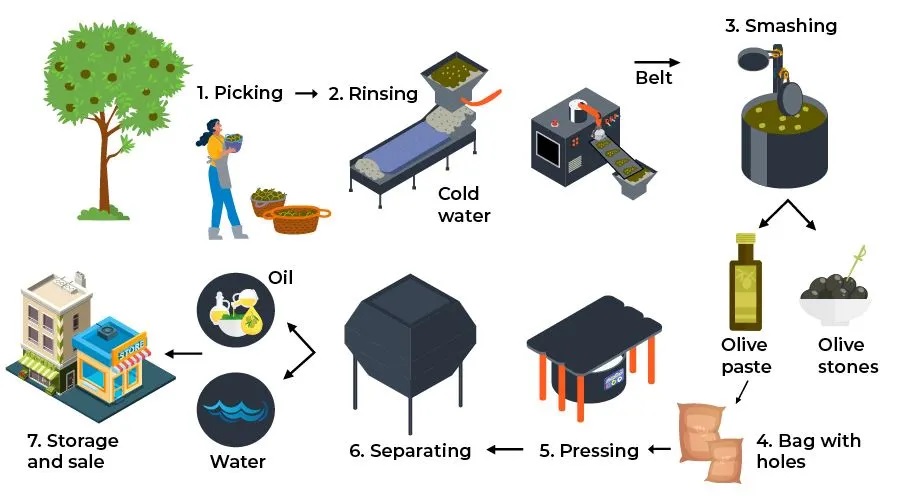
The given process depicts the stages in the production of olive oil. Overall, there are seven main stages from picking the inputs to the final sale.
To start with, olives are picked from the olive trees. Following this, the fresh olives are washed in cold water and rinsed several times until being cleaned enough. Then, the olives are put on a belt before put in a smashing device in which those are smashed and separated into olive stones and olive paste.
In the fourth stage, the olive paste is put into a bag with holes and the whole thing is put in a pressing apparatus where it is pressed to get the maximum possible liquid. Subsequently, this liquid is put in another separating device in which the mixture is separated into oil and water. The water and oil come out through disparate outfalls. Finally, oil is packed in bottles for storage and sale in the market.
(Word count: 156 words)
Band score: 7.0+
HIGHLIGHTED VOCABULARIES
| depict | /dɪˈpɪkt/ | (v) | mô tả |
| production of olive oil | /prəˈdʌkʃən əv ˈɑlɪv ɔɪl/ | (n phr) | quá trình sản xuất dầu ô liu |
| picked from | /pɪkt frʌm/ | (v phr) | được hái từ |
| fresh olives | /freʃ ˈɑlɪvz/ | (n phr) | ô liu tươi |
| rinsed | /rɪnst/ | (v) | được rửa lại |
| smashing device | /ˈsmæʃɪŋ dɪˈvaɪs/ | (n phr) | máy nghiền |
| olive stones | /ˈɑlɪv stoʊnz/ | (n phr) | hạt ô liu |
| olive paste | /ˈɑlɪv peɪst/ | (n phr) | hỗn hợp ô liu nghiền |
| pressing apparatus | /ˈpresɪŋ ˌæpəˈrætəs/ | (n phr) | thiết bị ép |
| maximum possible liquid | /ˈmæksɪməm ˈpɑsəbəl ˈlɪkwɪd/ | (n phr) | lượng chất lỏng tối đa có thể |
| separating device | /ˈsepəˌreɪtɪŋ dɪˈvaɪs/ | (n phr) | thiết bị tách |
| disparate | /ˈdɪspərət/ | (n) | riêng biệt, khác biệt |
| outfall | /ˈaʊtfɔl/ | (n) | đường dẫn ra bên ngoài, cửa xả |
| paste | /peɪst/ | (n) | hỗn hợp nhão, bột nhão |
| apparatus | /ˌæpəˈrætəs/ | (n) | thiết bị |
| liquid | /ˈlɪkwɪd/ | (n) | dung dịch |
| mixture | /ˈmɪkstʃər/ | (n) | hỗn hợp |
Writing Process: A lead pencil
Đề bài: The diagram below shows the production of a lead pencil.
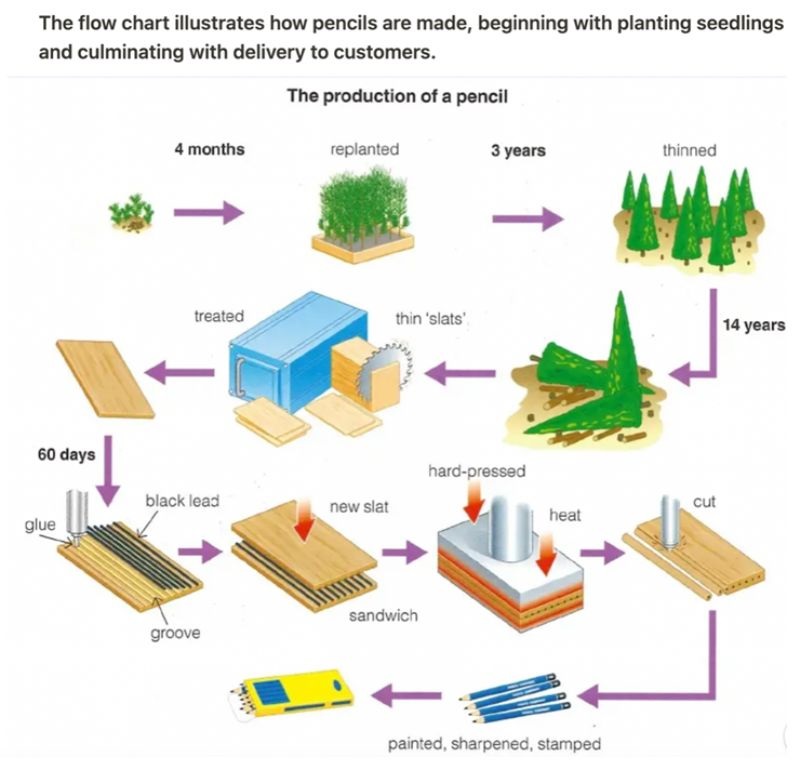
The given flow chart illustrates the process of manufacturing a graphite pencil. In general, the process comprises two primary phases, which may be further categorized into eleven individual components. The procedure commences with the planting of seedlings and concludes with the packing of the finished pencils.
In the first stage, seeds are cultivated in soil for a period of four months before being transplanted to different locations. After a period of three years, these trees undergo a process of thinning and are thereafter left undisturbed for a duration of 14 years. As reaching full maturity, the trees are harvested and transported to a plant for further processing.
Cutting equipment is used at the plant to slice the trees into slender slats prior to undergoing a treatment procedure. Following a two-month period, the wooden sheets have acquired cut grooves and have been supplemented with glue. The black leads are positioned between two slats. A heated and compressed machine is used to shape the freshly assembled sandwiches. Subsequently, the material is sliced into elongated cylindrical shapes. During the subsequent phase, the pencils undergo a process of being coated with various colors, sharpened, stamped, and then prepared for packaging. Ultimately, the items are easily available for delivery to customers.
Từ vựng hay:
| flow chart | /floʊ ʧɑrt/ | (n phr) | sơ đồ quy trình |
| manufacture | /ˌmænjuˈfækʧər/ | (v) | sản xuất |
| graphite pencil | /ˈɡræfaɪt ˈpensəl/ | (n phr) | bút chì than chì |
| comprise | /kəmˈpraɪz/ | (v) | bao gồm |
| primary phases | /ˈpraɪˌmeri ˈfeɪzɪz/ | (n phr) | các giai đoạn chính |
| individual components | /ˌɪndəˈvɪʤuəl kəmˈpoʊnənts/ | (n phr) | các công đoạn riêng lẻ |
| commence | /kəˈmens/ | (v) | bắt đầu |
| seedlings | /ˈsidlɪŋz/ | (n) | cây non |
| cultivate | /ˈkʌltəˌveɪt/ | (v) | trồng trọt |
| transplant | /trænsˈplænt/ | (v) | cấy, chuyển cây sang nơi khác |
| thinning | /ˈθɪnɪŋ/ | (n) | tỉa thưa |
| undisturbed | /ˌʌndɪˈstɜrbd/ | (adj) | không bị tác động |
| full maturity | /fʊl məˈʧʊrəti/ | (n phr) | độ trưởng thành hoàn toàn |
| harvest | /ˈhɑrvɪst/ | (v) | thu hoạch |
| processing | /ˈprɑsesɪŋ/ | (n) | quá trình xử lý |
| slender slats | /ˈslendər slæts/ | (n phr) | các thanh gỗ mỏng |
| treatment procedure | /ˈtritmənt prəˈsiʤər/ | (n phr) | quy trình xử lý |
| grooves | /ɡruvz/ | (n) | rãnh |
| supplement with glue | /ˈsʌpləˌment wɪð ɡlu/ | (v phr) | bổ sung keo |
| black leads | /blæk ledz/ | (n phr) | ruột chì đen |
| freshly assembled | /ˈfreʃli əˈsembəld/ | (adj phr) | mới được lắp ghép |
| elongated cylindrical shapes | /iˈlɔŋɡeɪtɪd səˈlɪndrɪkəl ʃeɪps/ | (n phr) | các hình trụ kéo dài |
| coated with | /ˈkoʊtɪd wɪð/ | (v phr) | được phủ bằng |
| sharpen | /ˈʃɑrpən/ | (v) | gọt nhọn |
| stamped | /stæmpt/ | (v) | được đóng dấu |
| packaging | /ˈpækɪʤɪŋ/ | (n) | đóng gói |
| available for delivery | /əˈveɪləbəl fɔr dɪˈlɪvəri/ | (adj phr) | sẵn sàng để giao đi |
Writing Process: Pineapple
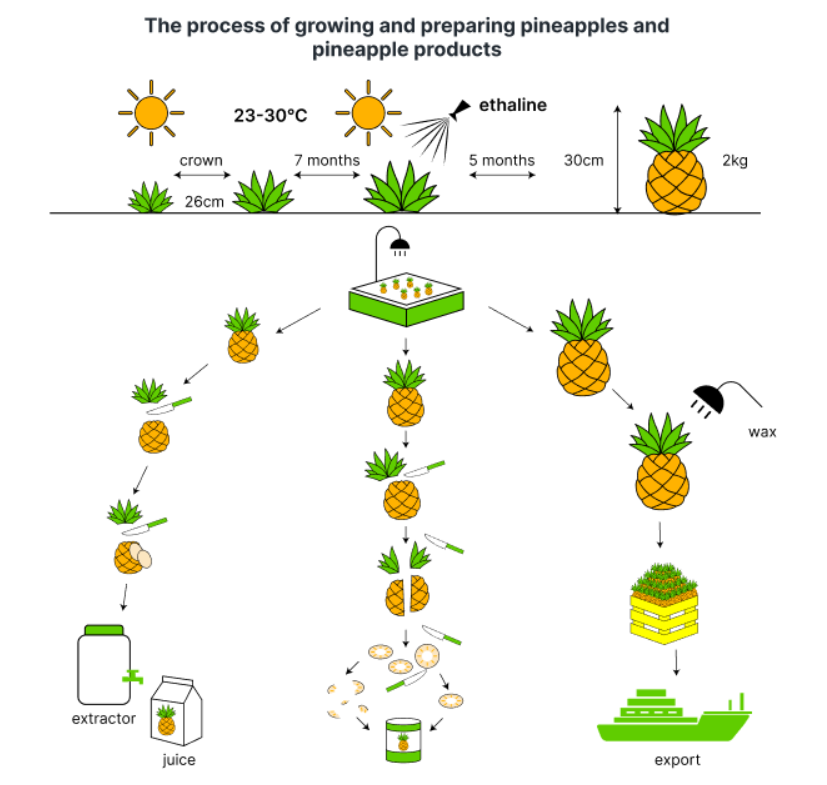
The diagram illustrates the growth and processing of pineapples into different products.
Summarise the information by selecting and reporting the main features and making comparisons where relevant.
| Introduction |
The diagram illustrates the stages of pineapple growth and the three different processing methods used to produce various products. Sơ đồ mô tả các giai đoạn phát triển của quả dứa cũng như ba phương pháp chế biến khác nhau để tạo ra các sản phẩm khác nhau. |
| Overview |
Overall, pineapples undergo a lengthy growth period before being processed in three distinct ways: slicing and extraction, canning, or being waxed and exported. Nhìn chung, dứa cần một thời gian dài để phát triển trước khi được xử lý theo ba cách riêng biệt: chiết xuất nước ép, đóng hộp hoặc phủ sáp để xuất khẩu. |
| Body 1 |
Describe the growing conditions and harvesting process of pineapples. Mô tả điều kiện sinh trưởng và quá trình thu hoạch dứa. |
| Body 2 |
Describe the three different processing methods:
Mô tả ba phương pháp chế biến khác nhau:
|
Sample Essay
The diagram illustrates the process of growing pineapples and the three different methods used to process them into final products.
Overall, pineapples require a long growth period before being processed in one of three ways: they can be extracted for juice, canned, or exported after being waxed.
Pineapples thrive in temperatures between 28°C and 30°C and take approximately seven months to reach a height of 26 cm. After an additional five months, they grow to 30 cm in height and weigh around 2 kg. Once mature, the pineapples are harvested and undergo different processing methods.
The first method involves juice extraction, where pineapples are peeled, sliced, and processed in an extractor to produce pineapple juice, which is then packaged in bottles. The second method is canning, where pineapples are cut into rings and packaged in cans, ready for distribution. The third method involves exportation, where whole pineapples are coated in wax to preserve freshness before being packed and shipped overseas.
Sơ đồ minh họa quá trình phát triển của quả dứa cũng như ba phương pháp chế biến khác nhau để tạo ra các sản phẩm cuối cùng.
Nhìn chung, dứa cần một thời gian dài để phát triển trước khi được xử lý theo ba cách khác nhau: chiết xuất nước ép, đóng hộp hoặc phủ sáp để xuất khẩu.
Dứa phát triển tốt trong nhiệt độ từ 28°C đến 30°C và mất khoảng bảy tháng để đạt chiều cao 26 cm. Sau năm tháng tiếp theo, chúng phát triển đến 30 cm và nặng khoảng 2 kg. Khi đã chín, dứa được thu hoạch và xử lý theo các phương pháp khác nhau.
Phương pháp đầu tiên là chiết xuất nước ép, trong đó dứa được gọt vỏ, cắt lát và đưa vào máy ép để sản xuất nước ép dứa, sau đó được đóng chai để tiêu thụ. Phương pháp thứ hai là đóng hộp, dứa được cắt thành khoanh tròn và đóng hộp để bảo quản lâu dài. Phương pháp thứ ba là xuất khẩu, trong đó dứa nguyên quả được phủ sáp để giữ độ tươi trước khi đóng gói và vận chuyển ra nước ngoài.
Sample 2: The method depicts the phases and equipment used in the manufacture and shipment of pineapples for final retail sale.
The natural development process has four stages, from little crowns to ripening fruits. Once collected, pineapples go through a manufacturing process that begins with preparation and size-based categorization and ends with three separate products: juice, canned pineapples, and whole fruits for export.
The natural process begins in tropical areas with temperatures ranging from 23°C to 30°C. Pineapples are grown using crowns throughout this phase, and after 7 months, ethaline is applied to assist the fruits achieve their maximum size for an additional 5 months. Pineapples are collected at different heights ranging from 26cm to 30cm (2kg).
In terms of production, the pineapples are thoroughly cleaned before being divided into three types. The smaller and medium-sized ones have their tops removed and their rinds peeled. The former is then run through a juice extractor to make juice cartons, while the latter are sliced and ready for canning. Meanwhile, the 30-centimeter pineapples go through a simpler procedure of wax coating, packaging into cartons, and lastly shipping by freight overseas.
Từ vựng nổi bật:
| illustrate | /ˈɪləˌstreɪt/ | (v) | minh họa |
| growth period | /ɡroʊθ ˈpɪriəd/ | (n phr) | giai đoạn phát triển |
| processed into | /ˈprɑsest ˈɪntu/ | (v phr) | được chế biến thành |
| final products | /ˈfaɪnəl ˈprɑdʌkts/ | (n phr) | sản phẩm cuối cùng |
| require | /rɪˈkwaɪər/ | (v) | cần, đòi hỏi |
| extracted for juice | /ɪkˈstræktɪd fɔr ʤus/ | (v phr) | được ép lấy nước |
| canned | /kænd/ | (adj) | được đóng hộp |
| export | /ɪkˈspɔrt/ | (v) | xuất khẩu |
| waxed | /wækst/ | (adj) | được phủ sáp |
| thrive in | /θraɪv ɪn/ | (v phr) | phát triển tốt trong |
| approximately | /əˈprɑksɪmətli/ | (adv) | khoảng, xấp xỉ |
| reach a height of | /riʧ ə haɪt əv/ | (v phr) | đạt chiều cao |
| mature | /məˈʧʊr/ | (adj) | trưởng thành, chín |
| harvest | /ˈhɑrvɪst/ | (v) | thu hoạch |
| undergo | /ˌʌndərˈɡoʊ/ | (v) | trải qua |
| juice extraction | /ʤus ɪkˈstrækʃən/ | (n phr) | quá trình ép nước |
| peeled | /pild/ | (v) | được gọt vỏ |
| sliced | /slaɪst/ | (v) | được cắt lát |
| extractor | /ɪkˈstræktər/ | (n) | máy ép |
| packaged in bottles | /ˈpækɪʤd ɪn ˈbɑtəlz/ | (v phr) | được đóng chai |
| cut into rings | /kʌt ˈɪntu rɪŋz/ | (v phr) | được cắt thành khoanh |
| distribution | /ˌdɪstrəˈbjuʃən/ | (n) | phân phối |
| coated in wax | /ˈkoʊtɪd ɪn wæks/ | (v phr) | được phủ sáp |
| preserve freshness | /prɪˈzɜrv ˈfreʃnəs/ | (v phr) | giữ độ tươi |
| shipped overseas | /ʃɪpt ˌoʊvərˈsiz/ | (v phr) | được vận chuyển ra nước ngoài |
| retail sale | /ˈriˌteɪl seɪl/ | (n phr) | bán lẻ |
| ripening fruits | /ˈraɪpənɪŋ fruts/ | (n phr) | quả chín dần |
| manufacturing process | /ˌmænjuˈfækʧərɪŋ ˈprɑses/ | (n phr) | quy trình chế biến |
| preparation | /ˌprepəˈreɪʃən/ | (n) | sự chuẩn bị |
| size-based categorization | /saɪz beɪst ˌkætəɡərəˈzeɪʃən/ | (n phr) | phân loại theo kích cỡ |
| throughout this phase | /θruˈaʊt ðɪs feɪz/ | (phr) | trong suốt giai đoạn này |
| applied to | /əˈplaɪd tu/ | (v phr) | được áp dụng lên |
| maximum size | /ˈmæksɪməm saɪz/ | (n phr) | kích thước tối đa |
| thoroughly cleaned | /ˈθɜroʊli klind/ | (v phr) | được làm sạch kỹ |
| rinds peeled | /raɪndz pild/ | (n phr) | vỏ được gọt bỏ |
| juice cartons | /ʤus ˈkɑrtənz/ | (n phr) | hộp nước ép |
| wax coating | /wæks ˈkoʊtɪŋ/ | (n phr) | lớp phủ sáp |
| freight | /freɪt/ | (n) | hàng vận chuyển, vận tải hàng hóa |
The process of making chocolate IELTS
The diagram below shows the process for the making of chocolate.
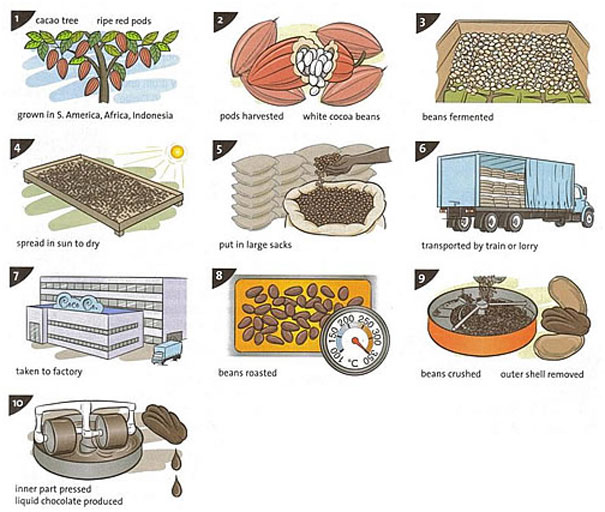
The images illustrate how to manufacture chocolate in industrial scale
Overall, the process includes several steps, beginning with the materials and ending when the liquid chocolate is produced.
The whole operation starts with the cocoa trees, which plays a vital part in this procedure and thrives in South America, Africa and Indonesia. When the pods are ready to be harvested, they will turn red or yellow. This is the time for the farmers to collect and split the shells into half by hands using machetes. All of the accumulated beans are going to experience the fermentation step inside banana leaves to get rid of thick and sticky white pulps covering the main ingredients. Before being put into sacks and weighed, these materials have to be thoroughly dried under the sun for a certain amount of time, which solely depends on the weather. And they will be loaded onto trucks or lorry, ready to get shipped.
Arriving safe and sound at the destinations, all of the bags will be stored in warehouses. The first process they have to go through inside the factory is roasting, conducted in a giant oven at around 360 OC. This will improve the flavour of the beans, preparing it for the next step : crushing and removing the outer shells. The former procedure will be done with a huge roller, while the worker will use the technique called winnowing to complete the latter stage. By simply pressing the inner part, the chocolate liquid is formed. This fluid are ready to be turned into various products such as bars, candy.
Từ vựng hay:
| industrial scale | /ɪnˈdʌstriəl skeɪl/ | (n phr) | quy mô công nghiệp |
| liquid chocolate | /ˈlɪkwɪd ˈʧɔklət/ | (n phr) | sô cô la lỏng |
| cocoa trees | /ˈkoʊkoʊ triz/ | (n phr) | cây ca cao |
| thrive in | /θraɪv ɪn/ | (v phr) | phát triển tốt ở |
| pods | /pɑdz/ | (n) | quả ca cao |
| harvest | /ˈhɑrvɪst/ | (v) | thu hoạch |
| machetes | /məˈʃetiz/ | (n) | dao rựa |
| fermentation | /ˌfɜrmənˈteɪʃən/ | (n) | quá trình lên men |
| banana leaves | /bəˈnænə livz/ | (n phr) | lá chuối |
| sticky white pulp | /ˈstɪki waɪt pʌlp/ | (n phr) | lớp thịt trắng dính |
| thoroughly dried | /ˈθɜroʊli draɪd/ | (v phr) | được phơi khô kỹ |
| warehouses | /ˈwerˌhaʊzɪz/ | (n) | nhà kho |
| roasting | /ˈroʊstɪŋ/ | (n) | quá trình rang |
| outer shells | /ˈaʊtər ʃelz/ | (n phr) | lớp vỏ ngoài |
| winnowing | /ˈwɪnoʊɪŋ/ | (n) | quá trình sàng tách vỏ |
Trên đây là bài mẫu IELTS Writing Task 1 Process với các dạng đề khó, các bạn cùng tham khảo, tự viết nâng cao kỹ năng của bản thân nhé.