
Cách viết IELTS Writing Task 1 Process
Process/Diagram (Quy trình) là dạng bài có nhiều đề khá khó - lạ mà nhiều năm nay thí sinh IELTS đều truyền nhau. Đề bài này sẽ đưa ra một quy trình sản xuất (production), miêu tả một hiện tượng/vòng đời tự nhiên (natural). Các quy trình này có sự khác nhau trong phân tích nên phần Process sẽ chia theo hai dạng bài để luyện tập dễ hơn.
Lưu ý:
Process/Diagram cũng có chia thêm thành hai kiểu:
- Circular (vòng lặp): Dạng này điểm đầu cũng là điểm cuối của quy trình. Nó là quy trình khép kín tạo thành vòng lặp, không có điểm bắt đầu cụ thể. Thí sinh dựa theo cách đánh số hiển thị để xác định trình tự phân chia các đoạn. Thường là Natural Process
- Linear (tuyến tính): Dạng này sẽ có điểm đầu và cuối khác nhau, không lặp lại. Có hai kiểu là được đánh số sẵn (dựa theo số để chia đoạn) hoặc không đánh số (cần phân tích ý nghĩa quy trình để xác định bước đồng thời chia đoạn phù hợp). Thường là Production Process.
Chúng ta sẽ chia theo hai phần về production và natural để phân tích bài Process thuận tiện hơn nhé. ⇒ Để xem cách làm các dạng bài khác, bạn click xem tại: Hướng dẫn viết Writing Task 1 chi tiết
Các bước viết bài Writing Process
Phân tích và cấu trúc viết bài
Để viết bài Process hiệu quả, bạn nên thực hiện phân tích và xem xét viết bài theo các bước sau:
Bước 1: Phân tích về quy trình
Mỗi quy trình có điểm bắt đầu và kết thúc, bạn cần phân tích kỹ các phần để viết vào bài đúng và đủ. Hãy xem quy trình
- nhân tạo hay tự nhiên
- có bao nhiêu giai đoạn
- trình tự là vòng lặp hay tuyến tính
- các giai đoạn thể hiện điều gì
- sự liên kết của từng giai đoạn...
Bước 2: Các bước viết bài
- Viết lại đề bài
- Viết Overview trong khoảng 2-3 câu tổng quan.
- Chia body theo quy trình tuyến tính hay vòng lặp. Nếu vòng lặp miêu tả theo số, nếu tuyến tính thì miêu tả thứ tự số hoặc dựa trên quy trình đã cho để xác định các bước + chia đoạn phù hợp.
- Sau đó phân tích chi tiết các phần: tìm chủ thể hành động, hành động, đối tượng bị tác độn, nguyên nhân/mục đích các bước theo quy trình, kết quả ra sao, so sánh các kết quả...thành body hoàn chỉnh.
Bước 3: Hoàn thành bài viết và kiểm tra lại.
Từ vựng quan trọng
Một số từ vựng chung cần biết trước khi tiến hành phân tích các biểu đồ tự nhiên và nhân tạo chi tiết bên dưới nhé.
Từ vựng xu hướng thay đổi (Sự xây dựng / Phá hủy / Sản xuất)
| Create | /kriːˈeɪt/ | v | tạo ra |
| Distribute | /dɪˈstrɪb.juːt/ | v | phân phối |
| Demolish | /dɪˈmɒl.ɪʃ/ | v | phá hủy |
| Produce | /prəˈdʒuːs/ | v | sản xuất |
| Erect | /ɪˈrekt/ | v | xây dựng, dựng lên |
| Redevelop | /ˌriː.dɪˈvel.əp/ | v | quy hoạch, tái phát triển |
Từ vựng mô tả loại biểu đồ
| Human-produced | /ˈhjuː.mən prəˈdʒuːst/ | adj | được sản xuất bởi con người |
| Man-made | /mænˈmeɪd/ | adj | nhân tạo, do con người làm ra |
| Cyclical | /ˈsɪk.lɪ.kəl/ | adj | có tính chu kỳ |
| Linear | /ˈlɪn.i.ər/ | adj | tuyến tính (theo đường thẳng/tiến trình một chiều) |
Từ vựng mô tả các bước trong quy trình (Sequencing Words)
| First / Firstly | /fɜːst/ / ˈfɜːst.li/ | adv | đầu tiên / giới thiệu bước đầu tiên |
| Second / Secondly | /ˈsek.ənd/ / ˈsek.ənd.li/ | adv | thứ hai / giới thiệu bước thứ hai |
| After / Afterwards | /ˈɑːf.tər/ / ˈɑːf.tə.wədz/ | adv / conj | sau đó / sau khi |
| Once | /wʌns/ | conj | một khi, ngay sau khi |
| Following | /ˈfɒl.əʊ.ɪŋ/ | prep | theo sau, sau khi |
| Next | /nekst/ | adv | tiếp theo / giới thiệu bước kế tiếp |
| Later | /ˈleɪ.tər/ | adv | sau đó, về sau |
| Subsequently | /ˈsʌb.sɪ.kwənt.li/ | adv | sau đó, tiếp theo đó |
| Finally / Lastly | /ˈfaɪ.nəl.i/ / ˈlɑːst.li/ | adv | cuối cùng / giới thiệu bước cuối cùng |
| Meanwhile | /ˈmiːn.waɪl/ | adv | trong khi đó |
| Step | /step/ | n | bước, giai đoạn |
| During | /ˈdjʊə.rɪŋ/ | prep | trong suốt (quá trình/khoảng thời gian) |
| While | /waɪl/ | conj | trong khi (hai bước xảy ra cùng lúc) |
| At the same time | /æt ðə seɪm taɪm/ | advial | đồng thời, cùng một lúc |
| Thereby | /ˌðeəˈbaɪ/ | adv | bằng cách đó, do đó |
Từ vựng mô tả một chu kỳ hoặc sự lặp lại
| Continue indefinitely | /kənˈtɪn.juː ɪnˈdef.ɪ.nət.li/ | v phr | tiếp tục vô thời hạn |
| Cycle | /ˈsaɪ.kəl/ | n / v | chu kỳ / quay vòng |
| Repetition | /ˌrep.ɪˈtɪʃ.ən/ | n | sự lặp lại |
| Loop | /luːp/ | n / v | vòng lặp / tạo thành vòng lặp |
| Recur | /rɪˈkɜːr/ | v | tái diễn, lặp lại |
Cách viết Writing Production Process
Phần 1 này chúng ta tìm hiểu về Production Process - Quy trình sản xuất (còn gọi là Man-made process,Manufacturing Process). Đề bài theo dạng bài miêu tả quá trình sản xuất của một nguyên liệu hoặc một sản phẩm cụ thể nào đó có sự tác động của con người. Các giai đoạn của quy trình được miêu tả theo ngôn ngữ bị động.
Chúng ta cùng luyện tập và ứng dụng các từ vựng, cấu trúc luôn nhé.
MATERIAL
|
Beginning |
Middle |
Ending |
|
e.g. Firstly - First of all, - To begin with, - Initially, - In the first stage/ step, |
e.g. Secondly Second of all, Subsequently, Following that, After that, In the second/ third stage/ step
|
e.g. Finally Lastly, Eventually, In the final/ last stage/ step, |
| To be picked | / tuː bi pɪkt/ | v | được hái |
| To be harvested | / ˈhɑː.vɪ.stɪd/ | v | được thu hoạch |
| To be dried in the sun | / draɪd ɪn ðə sʌn/ | v | được phơi dưới nắng |
| To be cleaned | / kliːnd/ | v | được làm sạch / được rửa |
| To be put in something | / pʊt ɪn ˈsʌm.θɪŋ/ | v | được bỏ vào cái gì |
| To be fermented | / fəˈmen.tɪd/ | v | được lên men |
| To be molded | / məʊldɪd/ | v | được đúc khuôn |
| To be frozen | / ˈfrəʊ.zən/ | v | được cấp đông, làm lạnh |
| To be separated | / ˈsep.ə.reɪ.tɪd/ | v | được tách ra |
| To be mixed with | / mɪkst wɪð/ | v | được trộn với cái gì |
| To be crushed | / krʌʃt/ | v | được nghiền nát |
| To be delivered / transported / sent / taken to | / dɪˈlɪv.əd /.../ | v | được vận chuyển / đem tới đâu |
| To be packaged | / ˈpæk.ɪdʒd/ | v | được đóng gói |
| To be sold | / səʊld/ | v | được bán |
STRATEGY
|
Needed information:
• Number of steps
• Starting & Ending point
|
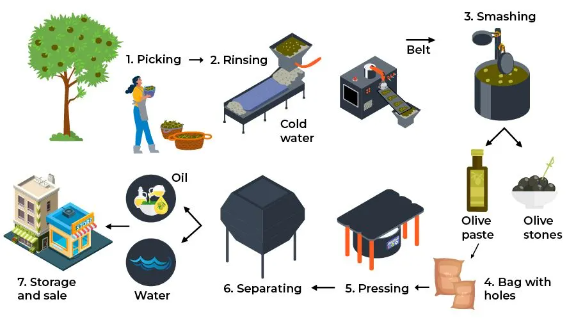
PRACTICE
Cách viết Writing Natural process
Phần 2 này chúng ta tìm hiểu về Natural process - Quy trình tự nhiên. Đề bài theo dạng bài này là miêu tả một hiện tượng tự nhiên (quá trình hình thành mưa, vòng tuần hoàn của nước…) hoặc miêu tả vòng đời tự nhiên của động vật (vòng đời ve sầu, bướm, ếch, cách bò sản xuất sữa….). Quy trình này không có tác động của con người mà cá thể tự phát triển, vận động. Nên chủ yếu quy trình này sẽ dùng ngôn ngữ dạng chủ động. Và nó diễn ra theo vòng lặp - Circular Process.
MATERIAL
1. Language to describe natural process
Activity 1. Complete the sentences with the correct words in the box.
- At the beginning of the cycle, salmon ………………………………………………… in the upper river.
- It takes about 15 to 20 days for salmon eggs to ……………………………………..
- Butterflies ……………………………………… the flowers of garden plants.
- In general, as it gradually ………………………………………, the life cycle of a salmon involves three main stages.
- The butterfly ……………………………………. in body form during development.
- The butterfly begins life as an egg, emerges as a ………………………………………..
- Most reptiles ……………………………………. by laying eggs on land.
- The fish then …………………………………….. to the lower river, where the water flows faster, and live there for about 4 years.
Activity 2. Translate the sentences into English.
- Ở giai đoạn đầu tiên, nước bốc hơi từ đại dương. At the first stage, water evaporates from the ocean.
- Sau đó, hơi nước ngưng tụ thành những đám mây. Then, the water vapor condenses into clouds.
- Tiếp theo, mưa rơi xuống mặt đất. Next, rain falls to the ground
- Cuối cùng, nước chảy vào sông và quay trở lại đại dương. Next, rain falls to the ground
Bổ sung từ vựng thường dùng trong dạng bài Natural Process (Quy trình tự nhiên)
| Lay eggs | /leɪ eɡz/ | v phr | đẻ trứng |
| Hatch | /hætʃ/ | v | nở (trứng) |
| Feed on | /fiːd ɒn/ | v phr | ăn cái gì, nuôi sống bằng cái gì |
| Grow in size | /ɡrəʊ ɪn saɪz/ | v phr | lớn lên, tăng kích thước |
| Shed old skin | /ʃed əʊld skɪn/ | v phr | lột xác, lột da cũ |
| Migrate | /maɪˈɡreɪt/ | v | di cư |
| Undergo changes | /ˌʌn.dəˈɡəʊ tʃeɪndʒ·ɪz/ | v phr | trải qua những thay đổi |
| Evaporate | /ɪˈvæp.ər.eɪt/ | v | bốc hơi |
| Condense | /kənˈdens/ | v | ngưng tụ |
| A certain period of time | /ə ˈsɜː.tən ˈpɪə.ri.əd əv taɪm/ | n phr | một khoảng thời gian nhất định |
| Between… and… | /bɪˈtwiːn… ænd…/ | phr | từ… đến… (ngày/tháng/năm) |
| In the space of only | /ɪn ðə speɪs əv ˈəʊn.li/ | phr | chỉ trong vòng (bao lâu) |
| A few days later | /ə fjuː deɪz ˈleɪ.tər/ | advial | một vài ngày sau |
STRATEGY
Overview
Activity 3. Fill in the blanks with the correct information
The diagram shows the life cycle of a frog.
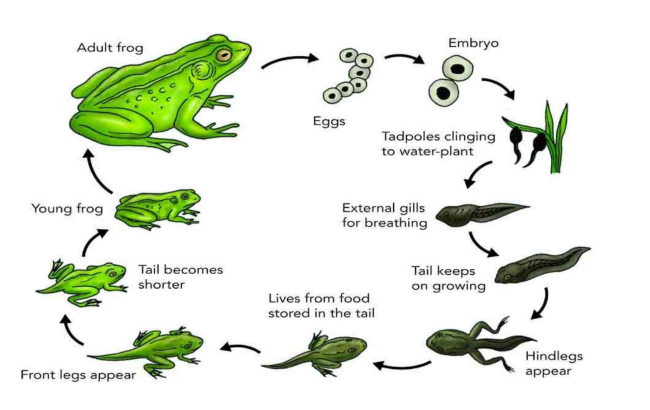
1. This amphibian undergoes a total of __________ steps of development throughout his life cycle, and the maturational change can be classified into _______ main stages namely eggs, tadpoles and frogs.
2. The process _________ with frogs’ eggs and ________ with the mature frog.
|
Needed information: •Number of steps •Starting & Ending point Useful structure: •Overall, the process includes/ is divided into + [numbers of steps], beginning with … and ending with … e.g. Overall, the process is divided into eleven steps, beginning with frogs’ eggs and ending with the mature frog. |
2. Body
Divide the number of steps into 2 halves:
∙Beginning - Middle: Describe each step
∙Middle – Ending: Describe each step
Useful structures
Beginning |
E.g. As can be seen from the first step, female frogs lay their spawns under water in the form of clusters of eggs, which contain the embryos inside. |
| Middle |
E.g. It is depicted in the subsequent step that the extension of tails allows developing tadpoles to move forwards. |
| Ending |
E.g. The process ends with the young adults becoming full-grown individuals. |
PRACTICE
Exercise 1:
The diagram below shows the life cycle of a salmon from egg to adult fish. Summarise the information by selecting and reporting the main features, and make comparisons where relevant.
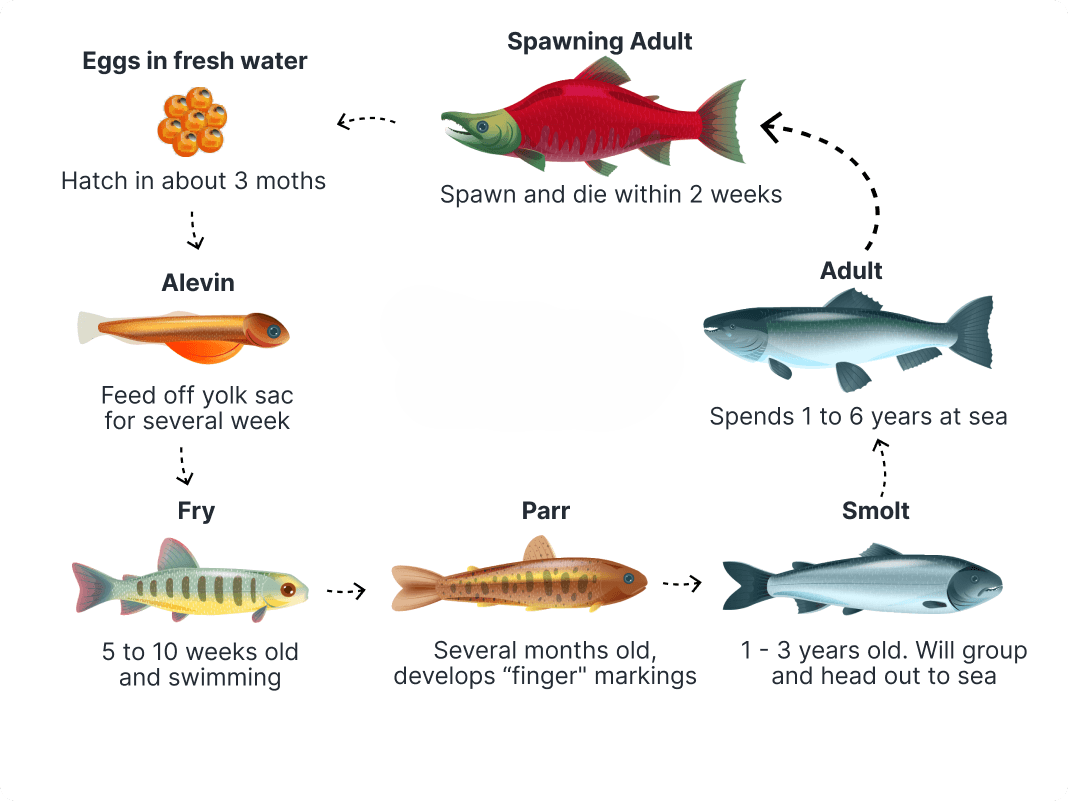
| Body 1: Early Stages (Freshwater) |
Egg stage: laid and hatched in fresh water after about 3 months. Alevin: hatchlings feed on yolk sac for several weeks. Fry: at 5–10 weeks old, fry start swimming freely. Parr: after several months, fry develop "finger" markings. |
| Body 2: Later Stages (Migration and Adulthood) |
Smolt: at 1–3 years old, smolts group and migrate to the sea. Adult: spend 1–6 years living and growing at sea. Spawning adult: return to freshwater to spawn and die within about 2 weeks, completing the cycle. |
Sample
The diagram illustrates the life cycle of a salmon undergoes from the egg stage to adulthood.
Overall, the life cycle consists of several distinct stages, beginning with the eggs laid in fresh water and ending with mature fish returning to their birthplace to spawn and die. The process involves both freshwater and marine environments.
Initially, salmon eggs are laid in fresh water and hatch after approximately three months. The young fish, known as alevins, feed off their yolk sacs for several weeks. Once they develop enough, they become fry, typically between five to ten weeks old, and begin swimming actively. As they grow further, they enter the parr stage, during which they develop distinctive "finger" markings.
At around one to three years old, the parr mature into smolts, group together, and migrate to the sea. After spending between one and six years at sea as adults, they eventually return to freshwater habitats. Upon their return, the mature salmon spawn within approximately two weeks and then die, completing the life cycle.
Luyện tập viết bài Process
Đề 1
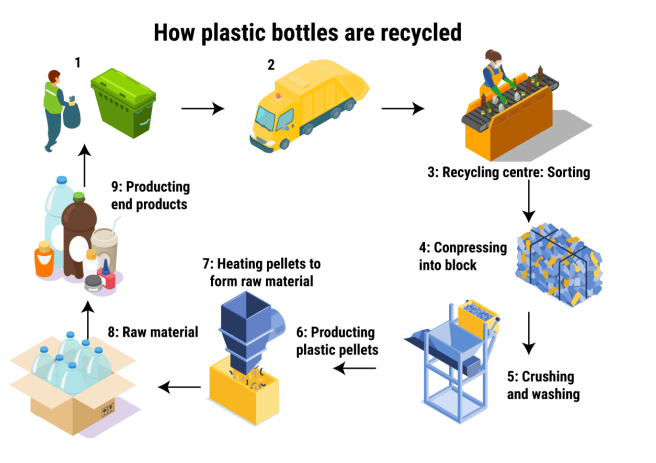
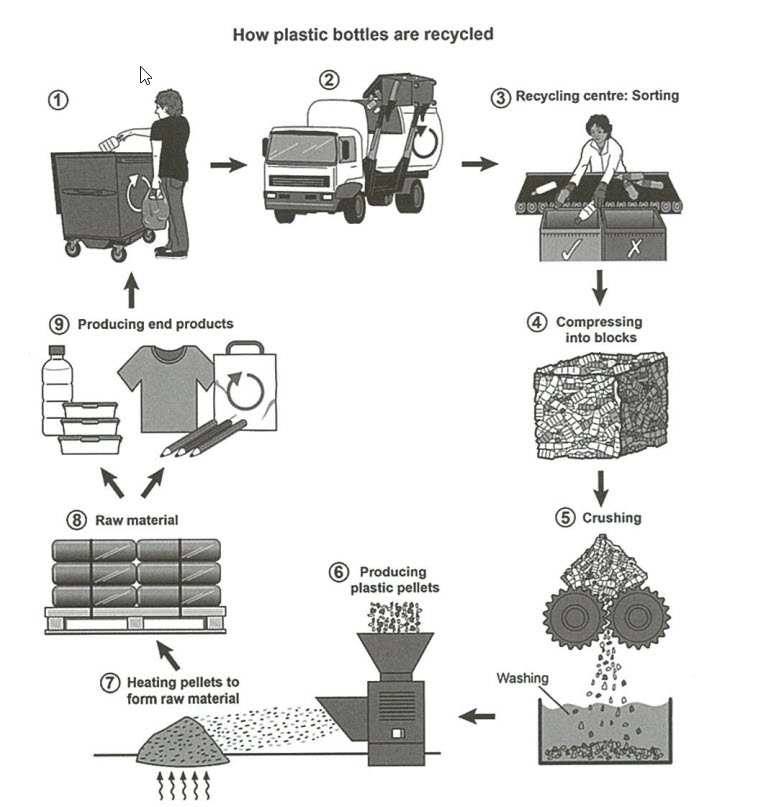
“The diagram below shows the process for recycling plastic bottles.
Summarise the information by selecting and reporting the main features, and make comparisons where relevant”
1. Phân tích:
+, Đề bài thể hiện quy trình tái chế chai nhựa.
+, Quy trình: Nhân tạo - artificial; tuyến tính - linear
+, Số bước: 9 bước
+, Số giai đoạn: 03 giai đoạn
B1:Thu thập và phân loại
B2: Xử lý và làm sạch
B3: Hoàn nguyên thành một vật liệu mới để sử dụng tiếp.
2. INTRO + OVERVIEW
Intro: Paraphrase đề bài
Overview: Chia thành các bước, giai đoạn, gọi tên các giai đoạn.
The picture illustrates how plastic bottles are recycled. Overall, there are a total of nine steps in the linear man-made process, which can be divided into three main stages including initial collection and sorting, followed by processing and cleaning, and finally reconstitution into a novel material for further usage.
Hình ảnh minh họa cách tái chế chai nhựa. Nhìn chung, có tổng cộng chín bước trong quy trình nhân tạo tuyến tính này, cái mà có thể được chia thành ba giai đoạn chính bao gồm thu thập và phân loại ban đầu, tiếp theo là xử lý và làm sạch, cuối cùng là hoàn nguyên thành một vật liệu mới để sử dụng tiếp.
3. BODY 1
Body 1: Miêu tả chi tiết 5 bước đầu
Recycling commences when an individual places their rubbish in a designated recycling bin, prior to being loaded into specialized garbage trucks. After transportation to the recycling center, the plastic bottles are sorted by hand, compressed tightly to form blocks and then crushed into small pieces and washed.
DỊCH: Quá trình tái chế bắt đầu khi một cá nhân bỏ rác của họ vào thùng tái chế được chỉ định, trước khi được chất vào các xe chở rác chuyên dụng. Sau khi vận chuyển đến trung tâm tái chế, các chai nhựa được phân loại bằng tay, nén chặt thành khối rồi nghiền nhỏ và rửa sạch.
4. BODY 2
Body 2: Miêu tả chi tiết 4 bước sau
The next stages involve transformation into a reusable material. The pieces of plastic are first poured into a machine that turns them into pellets. These pellets are then heated in order to create a raw material that can be used in the manufacture of products ranging from clothes and bottles to containers and pencils. These items are themselves recyclable and the process begins again.
DỊCH: Các giai đoạn tiếp theo liên quan đến việc chuyển đổi thành vật liệu có thể tái sử dụng. Đầu tiên, các mảnh nhựa được đổ vào một chiếc máy chuyên dụng biến chúng thành những viên nhỏ. Những viên này sau đó được nung nóng để tạo ra một nguyên liệu thô có thể được sử dụng trong sản xuất các sản phẩm từ quần áo, chai lọ đến hộp đựng và bút chì. Bản thân những vật dụng này có thể tái chế và quá trình tái chế lại bắt đầu.
Đề 2
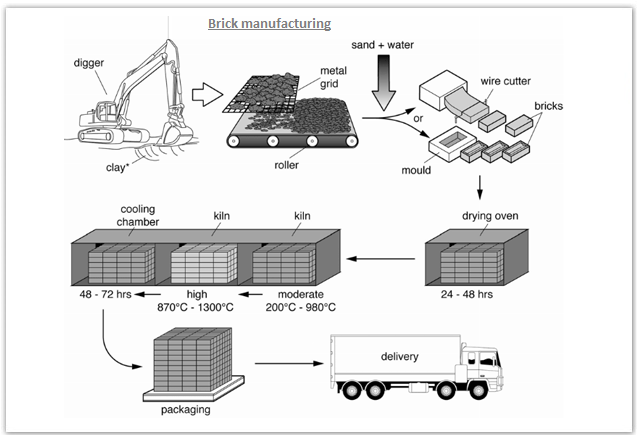
The diagram below shows the process by which bricks are manufactured for the building industry.
Summarise the information by selecting and reporting the main features, and make comparisons where relevant.
Write at least 150 words.
Introduction
The diagram below shows the process by which bricks are manufactured for the building industry.
Paraphrase:
- The diagram -> The given diagram
- Shows -> Illustrates
- The process by which bricks are manufactured for the building industry
-> different stages in the production of bricks for the building industries
* Useful phrases:
- The production of...
- The process of producing/making...
- ..is produced/made
- How to produce/make...
Full introduction:
The given diagram expresses different stages in the production of bricks for the building industries.
2. Overview
- How many stages in this process? 7 stages
- Start with? Digging the clay
- Finish with? Packing and delivering the brick
Useful structure
- There are …….. main steps/ stages in ...
- The ...... involves ... main stesp/ stages beginning/starting with ... and finishing with ...
- Overview:
In general, brick production involves 7 steps, starting from the digging stages and ending at the delivery stage.
3. Body
- Thorougly and properly pick the figures along with accurate vocabularies
Useful structure:
- The first/second/last... step
- At the same time/ Simultaneously
- To begin with/First of all
As can be seen, the first step of brick manufacturing is digging the clay with a large digger. This clay is then filtered and processed in a roller machine and then mixed with sand and water. In the third stage, the mixture is either kept in a mould or cut in a wire cutter to make the raw shape of the bricks. In the next step, the shaped raw bricks are dried for 24 to 48 hours in a drying oven. After that, the dried raw bricks are kept in a kiln, both in moderate and high temperature, up to 1300 degree centigrade and then placed in a cooling chamber for about 48 to 72 hours. This process makes the brick to be packed and delivered in the final two steps. The delivery process is the final process of brick manufacturing and as it is noted, brick making is a moderately complex process that requires some predefined works to make it usable.