
IELTS Writing Task 1 The development of cutting tools in the Stone Age - Đề hòn đá
Một đề khó nữa mà các bạn học Task 1 thường được nhắc đến đó là đề về Cutting tools in the Stone Age. Bạn cùng tham khảo bài mẫu, video chữa, giải đáp từ vựng cùng IELTS Fighter dưới đây nhé.
Đề bài:
The diagram below shows the development of cutting tools in the Stone Age.
Summarise the information by selecting and reporting the main features, and make comparisons where relevant.
Từ vựng quan trọng
- Stone Age cutting tools /stoʊn eɪdʒ ˈkʌtɪŋ tulz/ (n phr) : công cụ cắt thời Đồ Đá
- ancient people /ˈeɪnʃənt ˈpipəl/ (n phr) : người cổ đại
- relatively simple /ˈrelətɪvli ˈsɪmpəl/ (adj phr) : tương đối đơn giản
- rudimentary /ˌrudəˈmentəri/ (adj) : thô sơ
- refined /rɪˈfaɪnd/ (adj) : tinh xảo hơn
- measurements /ˈmeʒərmənts/ (n) : kích thước
- approximately /əˈprɑksɪmətli/ (adv) : khoảng, xấp xỉ
- in length /ɪn leŋθ/ (phr) : về chiều dài
- in width /ɪn wɪdθ/ (phr) : về chiều rộng
- front view /frʌnt vju/ (n phr) : góc nhìn phía trước
- rough surface /rʌf ˈsɜrfɪs/ (n phr) : bề mặt gồ ghề
- tapering shape /ˈteɪpərɪŋ ʃeɪp/ (n phr) : hình thuôn nhọn dần
- thickness /ˈθɪknəs/ (n) : độ dày
- pointy tip /ˈpɔɪnti tɪp/ (n phr) : đầu nhọn
- served the cutting purpose /sɜrvd ðə ˈkʌtɪŋ ˈpɜrpəs/ (v phr) : phục vụ mục đích cắt
- dating back to /ˈdeɪtɪŋ bæk tu/ (v phr) : có niên đại từ
- significantly larger /sɪɡˈnɪfɪkəntli ˈlɑrdʒər/ (adj phr) : lớn hơn đáng kể
- closely resembled /ˈkloʊsli rɪˈzembəld/ (v phr) : rất giống
- water drop /ˈwɔtər drɑp/ (n phr) : giọt nước
- round bottom /raʊnd ˈbɑtəm/ (n phr) : đáy tròn
- side view /saɪd vju/ (n phr) : góc nhìn bên cạnh
- sharper than /ˈʃɑrpər ðæn/ (adj phr) : sắc hơn
- back view /bæk vju/ (n phr) : góc nhìn phía sau
- development /dɪˈveləpmənt/ (n) : sự phát triển
- perspectives /pərˈspektɪvz/ (n) : góc nhìn
- significant improvements /sɪɡˈnɪfɪkənt ɪmˈpruvmənts/ (n phr) : những cải tiến đáng kể
- symmetrical /sɪˈmetrɪkəl/ (adj) : cân đối, đối xứng
- efficient /ɪˈfɪʃənt/ (adj) : hiệu quả
- oval-shaped /ˈoʊvəl ʃeɪpt/ (adj) : có hình bầu dục
- edges /ˈedʒɪz/ (n) : các cạnh
- uneven /ʌnˈivən/ (adj) : không đều
- pointed design /ˈpɔɪntɪd dɪˈzaɪn/ (n phr) : thiết kế nhọn
- cutting ability /ˈkʌtɪŋ əˈbɪləti/ (n phr) : khả năng cắt
- indicating /ˈɪndɪˌkeɪtɪŋ/ (v) : cho thấy
- tool-making techniques /tul ˈmeɪkɪŋ tekˈniks/ (n phr) : kỹ thuật chế tác công cụ
Outline và phân tích viết bài
Outline cơ bản
| Introduction |
Describe the diagram and highlight its purpose. Mô tả biểu đồ và nêu mục đích của nó. |
| Overview |
Summarize the overall development of cutting tools between the early and later periods. Tóm tắt sự phát triển chung của công cụ cắt giữa thời kỳ đầu và sau. |
| Body Paragraph 1 |
Explain the characteristics of Tool A, including its shape and surface. Giải thích đặc điểm của Công cụ A, bao gồm hình dáng và bề mặt. |
| Body Paragraph 2 |
Discuss the improvements in Tool B, focusing on its refinement and efficiency. Thảo luận sự cải tiến trong Công cụ B, tập trung vào độ tinh xảo và hiệu quả. |
Sample:
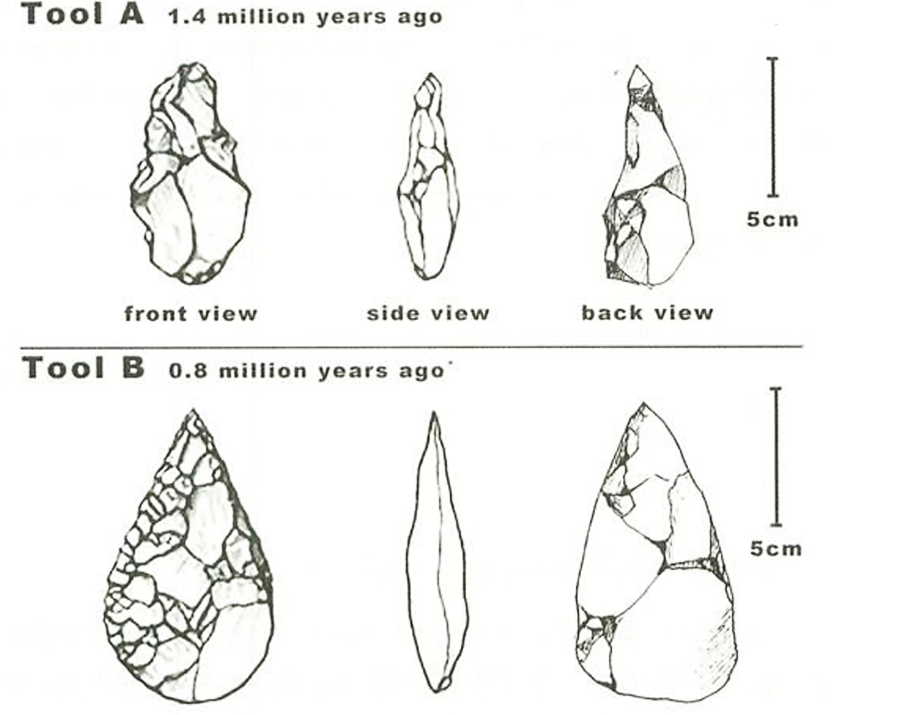
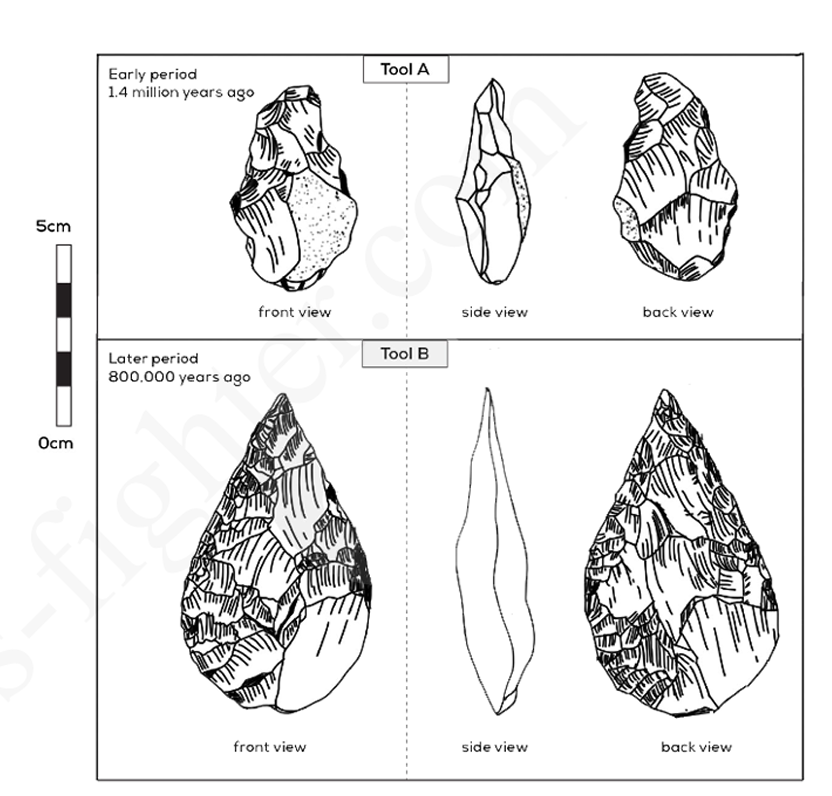
The diagram illustrates the development of cutting tools in the Stone Age, comparing Tool A from 1.4 million years ago with Tool B, used 800,000 years ago. Both tools are shown from three perspectives: front, side, and back views.
Overall, the tools demonstrate significant improvements over time, becoming sharper and more symmetrical. Tool B is more refined and appears more efficient for cutting purposes compared to Tool A.
Tool A, dated to 1.4 million years ago, is roughly oval-shaped and appears rudimentary. From the front and back views, its edges are uneven, and it lacks a pointed tip. The side view reveals that Tool A is relatively thick, with a width of approximately 5 cm, making it less effective for precision cutting.
In contrast, Tool B, from 800,000 years ago, shows remarkable advancements. The front and back views highlight its more symmetrical and pointed design, which would enhance its cutting ability. Additionally, the side view demonstrates a thinner and sharper edge, indicating a better understanding of tool-making techniques.
Biểu đồ minh họa sự phát triển của các công cụ cắt trong thời kỳ Đồ Đá, so sánh Công cụ A từ 1,4 triệu năm trước với Công cụ B, được sử dụng cách đây 800.000 năm. Cả hai công cụ đều được hiển thị từ ba góc nhìn: mặt trước, mặt bên và mặt sau.
Nhìn chung, các công cụ cho thấy sự cải tiến đáng kể theo thời gian, trở nên sắc bén và đối xứng hơn. Công cụ B được chế tác tinh xảo hơn và có vẻ hiệu quả hơn cho việc cắt so với Công cụ A.
Công cụ A, có niên đại cách đây 1,4 triệu năm, có hình dáng khá bầu dục và trông thô sơ. Từ góc nhìn trước và sau, các cạnh của nó không đều và không có đầu nhọn. Góc nhìn bên cho thấy Công cụ A tương đối dày, với bề rộng khoảng 5 cm, làm cho nó kém hiệu quả hơn trong việc cắt chính xác.
Ngược lại, Công cụ B, từ 800.000 năm trước, cho thấy sự tiến bộ vượt bậc. Góc nhìn trước và sau làm nổi bật thiết kế đối xứng và nhọn hơn, giúp cải thiện khả năng cắt. Ngoài ra, góc nhìn bên thể hiện một cạnh mỏng và sắc hơn, cho thấy kỹ thuật chế tạo công cụ đã tiến bộ.
Bài mẫu 2:
The two pictures compare 2 Stone Age cutting tools which were probably made and used by ancient people.
In general, while tool A was relatively simple and rudimentary, tool B was more refined.
First, 1.4 million years ago, tool A’s measurements were approximately 9 cm in length and 5 cm in width. From the front view, it had a rough surface. With a tapering shape, its biggest part was the middle, while the two ends were much smaller. The side view shows its thickness at about 2.5 cm. In the back, the large bottom part was perhaps the handle, while the pointy tip served the cutting purpose.
Dating back to 800,000 thousand years ago, tool B was nearly 12 cm long and 8 cm wide, which was significantly larger than tool A. From the front view, tool B closely resembled a water drop with a pointy tip and a round bottom. From the side view, both the edge and the tip seem straight and sharper than tool A. The back view clearly displays the bigger size of tool B compared to tool A. (186)
Đề thi khó nhưng phân tích tốt thì sợ gì nữa đâu. Cùng luyện tập thêm với các đề khác: