
IELTS Listening chủ đề Biology - Sinh học
Nội dung
Bài học Listening hôm nay các bạn cùng tìm hiểu về chủ đề Biology - Sinh học nhé. Chủ đề này sẽ gặp nhiều ở Part 3-4 với nhiều thuật ngữ riêng, bạn học thêm để mở rộng vốn từ, luyện tập nghe hiệu quả.
Ở Part 4, chủ đề Biology thường là đoạn hội thoại, bài văn, bài nói học thuật về nội dung như:
- ecology, evolution, genetics, biodiversity
- animal behaviour, conservation, habitats
- microbiology/health-related topics (vi khuẩn, miễn dịch, bệnh truyền nhiễm)
- lab studies, research methods, field experiments.....
Dạng câu hỏi hay gặp trong Part 4 như là:
- Summary/Note completion: definitions (khái niệm sinh học), research methods, environmental impacts...
- Table completion: classification, results, comparisons
- Flow-chart completion: process: experiment steps / life cycle
- Sentence completion: measured outcomes, habitat loss, conservation measures
- Multiple Choice: problem, cause, result ... (thỉnh thoảng) MCQ về nguyên nhân–kết quả/quan điểm
Biology cũng xuất hiện khá nhiều trong Part 3, nội dung xoay quanh cuộc thảo luận của sinh viên, người hướng dẫn về:
- assignment/report trong môn biology/ecology
- research proposal, method, data collection, ethics
Dạng câu hỏi hay gặp như:
- Multiple Choice: trắc nghiệm về kế hoạch nghiên cứu, phương pháp...
- Matching: ai phụ trách gì/ý kiến của ai...
0 Summary/Note completion: chốt phương pháp, timeline, resources...
Thỉnh thoảng trong Part 2 cũng có nội dung Biology, nói về
- wildlife centre / nature reserve / aquarium / botanical garden...
- guided tour về động thực vật, khu bảo tồn....
Dạng câu hỏi hay gặp là
- Map/Plan labeling: khu bảo tồn/aquarium layout...
- Matching: species <-> habitat/feature)
- Note completion : opening times, rules, facilities...
Biology ít xuất hiện trong Part 1, thỉnh thoảng có nói liên quan ví dụ như đăng ký workshop/short course liên quan (first aid, health screening…).
Bài học này sẽ chia theo 2 phần: Vocab và practice, bạn xem cùng video và điền thông tin cần cho nội dung bên dưới.
Từ vựng Listening chủ đề Biology
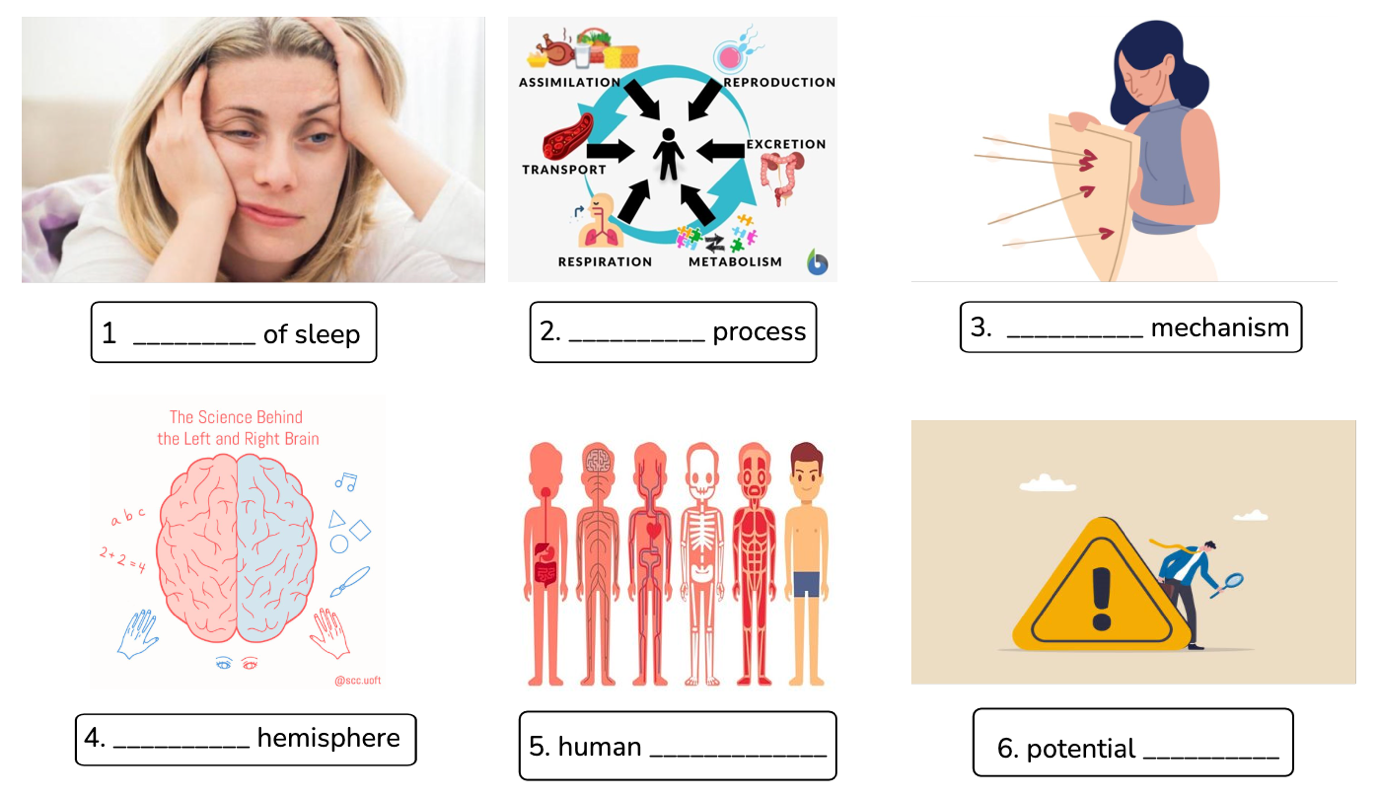
*Activity 1. Look at the pictures. Complete the common word combinations using the vocabulary above. Write the missing words in the blanks.
| defense – deprived – threats – biological – physiology – brain |
*Activity 2. Read the paragraph below. Each bold word can be replaced by one or more than one word or phrase below with a similar meaning. Write a synonym for each bold word in the blank.
In biology, scientists study how the human body functions and adapts to its environment. Our survival often depends on our ability to sense and respond to threats, such as viruses or dangerous conditions. When these defenses fail, the result can sometimes be fatal, leading to serious illness or even death. Inside every cell, genes carry the instructions that determine our eye color, height, and even our resistance to disease. However, people differ in their susceptibility to infections — some may catch the flu easily, while others rarely get sick. During accidents or medical emergencies, a person may lose consciousness, becoming unaware of their surroundings. Doctors must handle such patients carefully because the human body is delicate, especially the brain and internal organs. In their work, scientists often encounter new bacteria or viruses, which helps them better understand how life forms evolve and survive.
|
Column A |
Column B |
|
1. fatal |
A. The ability to be aware and think |
|
2. encounter |
B. Come across or experience something unexpectedly |
|
3. consciousness |
C. Extremely fragile or easily damaged |
|
4. threats |
D. Likely to cause death |
|
5. delicate |
E. Possible dangers or harms that may cause injury or trouble |
|
6. genes |
F. Units of heredity that determine traits passed from parents to offspring |
|
7. susceptibility |
G. The tendency to be easily affected or harmed by something |
Listening Practice
LISTENING PRACTICE
Check up. Complete the note below. (Audio 1)
Write NO MORE THAN TWO WORDS for each answer.
|
The role of sleep in humans and animals Importance of sleep in animals
Differences in animals’ sleep and reasons for their ways of resting
- swim to the surface when sleeping, because they need to {{3}}.
- are constantly {{4}} in the presence of numerous predators.
- do most of their sleeping standing up. - do occasionally take short naps lying down. Lying in one position for a long time could well injure a horse, because their {{5}} are delicate. Potential problems encountered
Importance of sleep in humans
|
Homework bạn làm bài tập bên dưới nhé.
Mở rộng từ vựng
| Biology | /baɪˈɒlədʒi/ | Sinh học |
| Biologist | /baɪˈɒlədʒɪst/ | Nhà sinh học |
| Ecosystem | /ˈiːkəʊsɪstəm/ | Hệ sinh thái |
| Habitat | /ˈhæbɪtæt/ | Môi trường sống |
| Species | /ˈspiːʃiːz/ | Loài |
| Biodiversity | /ˌbaɪəʊdaɪˈvɜːsɪti/ | Đa dạng sinh học |
| Population | /ˌpɒpjʊˈleɪʃn/ | Quần thể |
| Predator | /ˈpredətə/ | Động vật săn mồi |
| Prey | /preɪ/ | Con mồi |
| Food chain | /fuːd tʃeɪn/ | Chuỗi thức ăn |
| Food web | /fuːd web/ | Lưới thức ăn |
| Adaptation | /ˌædæpˈteɪʃn/ | Sự thích nghi |
| Evolution | /ˌiːvəˈluːʃn/ | Tiến hóa |
| Natural selection | /ˌnætʃrəl sɪˈlekʃn/ | Chọn lọc tự nhiên |
| Gene | /dʒiːn/ | Gen |
| Genetics | /dʒəˈnetɪks/ | Di truyền học |
| DNA | /ˌdiː en ˈeɪ/ | ADN |
| Mutation | /mjuːˈteɪʃn/ | Đột biến |
| Inheritance | /ɪnˈherɪtəns/ | Sự di truyền |
| Cell | /sel/ | Tế bào |
| Tissue | /ˈtɪʃuː/ | Mô |
| Organ | /ˈɔːɡən/ | Cơ quan |
| Organism | /ˈɔːɡənɪzəm/ | Sinh vật |
| Microorganism | /ˌmaɪkrəʊˈɔːɡənɪzəm/ | Vi sinh vật |
| Bacteria | /bækˈtɪəriə/ | Vi khuẩn |
| Virus | /ˈvaɪrəs/ | Vi rút |
| Fungus | /ˈfʌŋɡəs/ | Nấm |
| Parasite | /ˈpærəsaɪt/ | Ký sinh trùng |
| Host | /həʊst/ | Vật chủ |
| Immune system | /ɪˈmjuːn ˈsɪstəm/ | Hệ miễn dịch |
| Infection | /ɪnˈfekʃn/ | Nhiễm trùng |
| Transmission | /trænzˈmɪʃn/ | Sự lây truyền |
| Antibiotic | /ˌæntibaɪˈɒtɪk/ | Kháng sinh |
| Vaccine | /ˈvæksiːn/ | Vắc-xin |
| Conservation | /ˌkɒnsəˈveɪʃn/ | Bảo tồn |
| Endangered species | /ɪnˈdeɪndʒəd ˈspiːʃiːz/ | Loài nguy cấp |
| Extinction | /ɪkˈstɪŋkʃn/ | Tuyệt chủng |
| Reproduction | /ˌriːprəˈdʌkʃn/ | Sinh sản |
| Breeding | /ˈbriːdɪŋ/ | Nhân giống |
| Life cycle | /ˈlaɪf ˌsaɪkl/ | Vòng đời |
| Growth rate | /ɡrəʊθ reɪt/ | Tốc độ tăng trưởng |
| Photosynthesis | /ˌfəʊtəʊˈsɪnθəsɪs/ | Quang hợp |
| Respiration | /ˌrespəˈreɪʃn/ | Hô hấp |
| Nutrient | /ˈnjuːtriənt/ | Chất dinh dưỡng |
| Enzyme | /ˈenzaɪm/ | Enzyme |
| Experiment | /ɪkˈsperɪmənt/ | Thí nghiệm |
| Hypothesis | /haɪˈpɒθəsɪs/ | Giả thuyết |
| Data analysis | /ˈdeɪtə əˈnæləsɪs/ | Phân tích dữ liệu |
| Field study | /fiːld ˈstʌdi/ | Nghiên cứu thực địa |
| Lab equipment | /læb ɪˈkwɪpmənt/ | Thiết bị phòng thí nghiệm |
Cả nhà học nhé.
Bài tập

Bài tập về nhà
- 10 câu hỏi
- 20 phút



Bình luận