
IELTS Listening chủ đề Family - Gia đình
Nội dung
Chủ đề Family - Gia đình sẽ rất thường xuyên xuất hiện trong đề thi IELTS Listening. Nên các bạn cùng luyện tập với các bài nghe dưới đây, bài đơn giản đến nâng cao, mở rộng vốn từ và cách làm bài nhé.
Family hay gặp nhất ở Part 1 với các nội dung liên quan đăng ký dịch vụ, hỏi thông tin, đặt lịch...như là đăng ký thành viên CLB, dịch vụ chăm sóc trẻ, đặt lịch bác sĩ, hẹn gặp ai đó, lịch tư vấn...
Dạng câu hỏi thường có như là Form completion / Note completion, chủ yếu điền thông tin thôi. Các thông tin cụ thể như: name, age, relationship, contact details, address, emergency contact, yêu cầu dịch vụ…hoặc thời gian, chi phí, nhóm tuổi, lịch học…
Bạn cũng có thể gặp câu hỏi Short answer, trả lời về: số trẻ, độ tuổi, ngày/giờ).
Chú ý với các câu hỏi sẽ thường gặp bẫy về spelling (tên riêng), số điện thoại, địa chỉ, ngày tháng, chữ cái (B/D/P/T), số “thirteen vs thirty”.
Bên cạnh Part 1 thì Family cũng hay có ở đề Part 2. Khi đó người nói sẽ thường giới thiệu về dịch vụ cộng đồng cho gia đình: childcare centre, family support, hoạt động cuối tuần cho phụ huynh & trẻ em, event cho gia đình…
Dạng câu hỏi thường gặp như là Multiple choice (chọn thông tin đúng về hoạt động/dịch vụ cho gia đình), Matching (hoạt động với đối tượng, dịch vụ với lợi ích..). Thỉnh thoảng sẽ có Map/plan labeling khi nói về trung tâm cộng đồng/nhà trẻ/điểm sinh hoạt gia đình.
Part 3,4 thì ít gặp hơn. Trong Part 3 có thể là nhóm sinh viên thảo luận về đề tài liên quan gia đình (xã hội học, chăm sóc trẻ, work-life balance).
Để hiểu rõ cách làm từng dạng bài, bạn có thể xem lại qua chuỗi video bài học ở: Khóa IELTS Listening online theo dạng bài nhé!
Bài học này sẽ chia theo 2 phần: Vocab và practice, bạn xem cùng video và điền thông tin cần cho nội dung bên dưới.
Luyện nghe: Vocabulary focus
Chúng ta có 2 bài hoạt động nhỏ, bạn ghi đáp án vào nháp của mình. Xem video để cùng cô Dương phân tích kỹ hơn.
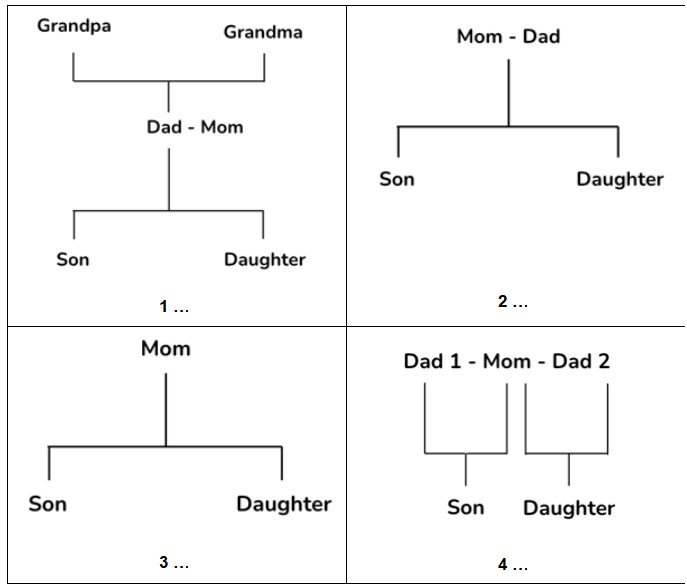
Activity 1. Match the words a–d with the family trees 1–4 below.
A. an extended family
B. a step-family
C. a nuclear family
D. a one-parent family
Activity 2. Complete the sentences 1–10 with words from the table.
|
cohabitation |
unmarried couples |
DINKS (Dual Income No Kids) |
hardship |
rented accommodation |
|
childcare issues |
poverty |
previous relationship |
single parents |
suffer from |
1. Many young people today choose to live together as _______________________ before deciding whether to get married.
2. Couples who focus on their careers and finances rather than raising children are often called _______________________ .
3. Finding affordable nurseries and babysitters can be a big problem for families facing _______________________ .
4. After losing his job, the father struggled with _______________________ and had to rely on community support.
5. The war forced many families into _______________________ and made daily life very difficult.
6. _______________________ often face extra responsibilities because they must raise children on their own.
7. Elderly people may _______________________ loneliness if they live far away from their children.
8. Due to high housing prices, many young adults rent small flats and live in _______________________ .
9. A step-family is formed when one or both partners have children from a _______________________.
10. In many countries, _______________________ has become more common as couples choose to live together without getting married.
|
Form/ Note Completion Before Listening Read the instructions carefully, and take particular note of the word limit. Look for a title, heading. Underline key words. Identify answers’ type of words (nouns, verbs, adjectives, etc.). While Listening Listen and find the answers. Think about the word limit. After Listening Double-check your answers (spelling, plural/singular, etc.) Notes: Do NOT change the word you hear in the recording. |
Listening Practice
Check up. Complete the sentences below. (Audio 1)
Write NO MORE THAN TWO WORDS AND/OR A NUMBER for each answer.
1. Recent changes in society are eroding the traditional __________ structure.
2. Slightly fewer than 50% of American children under 13 live in a __________.
3. Statistics show that cohabiting couples are more liable to __________ than married couples.
4. DINKS focus on __________ rather than having children.
5. __________ children in the UK now live in single parent families.
6. According to some sociologists, the outlook of __________ has led to an increase in single parenting.
7. Mothers who have never married make up the largest group of __________________.
8. Single parent families are more likely to live in __________.
Homework. các bạn làm bài bên dưới nhé.
Bổ sung thêm từ vựng hay
Ngoài bài học và các từ vựng, làm bài trên, cô gửi bạn thêm list từ vựng theo chủ đề Family trong Listening, để dễ dàng hiểu đề và làm bài nhé.
| Vocabulary | IPA | Vietnamese Meaning |
| Immediate family | /ɪˈmiːdiət ˈfæməli/ | Gia đình ruột thịt |
| Extended family | /ɪkˈstendɪd ˈfæməli/ | Gia đình mở rộng |
| Household | /ˈhaʊshəʊld/ | Hộ gia đình |
| Single parent | /ˈsɪŋɡl ˈpeərənt/ | Phụ huynh đơn thân |
| Only child | /ˈəʊnli tʃaɪld/ | Con một |
| Sibling | /ˈsɪblɪŋ/ | Anh/chị/em ruột |
| Spouse | /spaʊs/ | Vợ/chồng |
| In-laws | /ˈɪn lɔːz/ | Gia đình thông gia |
| Guardian | /ˈɡɑːdiən/ | Người giám hộ |
| Step-parent | /ˈstep ˌpeərənt/ | Cha/mẹ kế |
| Household chores | /ˈhaʊshəʊld tʃɔːz/ | Việc nhà |
| Take turns | /teɪk tɜːnz/ | Luân phiên |
| Look after | /lʊk ˈɑːftə/ | Chăm sóc |
| Raise children | /reɪz ˈtʃɪldrən/ | Nuôi dạy con |
| Breadwinner | /ˈbredˌwɪnə/ | Trụ cột kinh tế |
| Family routine | /ˈfæməli ruːˈtiːn/ | Sinh hoạt gia đình |
| Daily schedule | /ˈdeɪli ˈʃedjuːl/ | Thời gian biểu |
| Do the cooking | /duː ðə ˈkʊkɪŋ/ | Nấu ăn |
| Share responsibilities | /ʃeə rɪˌspɒnsəˈbɪlətiz/ | Chia sẻ trách nhiệm |
| Spend time together | /spend taɪm təˈɡeðə/ | Dành thời gian bên nhau |
| Live with parents | /lɪv wɪð ˈpeərənts/ | Sống cùng bố mẹ |
| Move out | /muːv aʊt/ | Dọn ra ở riêng |
| Live independently | /lɪv ˌɪndɪˈpendəntli/ | Sống tự lập |
| Family home | /ˈfæməli həʊm/ | Nhà gia đình |
| Accommodation | /əˌkɒməˈdeɪʃn/ | Chỗ ở |
| Flatmate | /ˈflætmeɪt/ | Bạn ở chung |
| Rent a place | /rent ə pleɪs/ | Thuê nhà |
| Share a room | /ʃeə ə ruːm/ | Ở chung phòng |
| Guest room | /ɡest ruːm/ | Phòng khách |
| Living arrangements | /ˈlɪvɪŋ əˈreɪndʒmənts/ | Sắp xếp chỗ ở |
| Close-knit family | /ˌkləʊsˈnɪt ˈfæməli/ | Gia đình gắn bó |
| Get along well | /ɡet əˈlɒŋ wel/ | Hòa thuận |
| Family support | /ˈfæməli səˈpɔːt/ | Sự hỗ trợ gia đình |
| Spend quality time | /spend ˈkwɒləti taɪm/ | Thời gian chất lượng |
| Family gathering | /ˈfæməli ˈɡæðərɪŋ/ | Họp mặt gia đình |
| Stay in touch | /steɪ ɪn tʌtʃ/ | Giữ liên lạc |
| Family conflict | /ˈfæməli ˈkɒnflɪkt/ | Mâu thuẫn gia đình |
| Generation gap | /ˌdʒenəˈreɪʃn ɡæp/ | Khoảng cách thế hệ |
| Feel responsible for | /fiːl rɪˈspɒnsəbl fɔː/ | Cảm thấy có trách nhiệm |
| Rely on | /rɪˈlaɪ ɒn/ | Dựa vào |
| Family background | /ˈfæməli ˈbækɡraʊnd/ | Hoàn cảnh gia đình |
| Family budget | /ˈfæməli ˈbʌdʒɪt/ | Ngân sách gia đình |
| Family event | /ˈfæməli ɪˈvent/ | Sự kiện gia đình |
| Family commitments | /ˈfæməli kəˈmɪtmənts/ | Trách nhiệm gia đình |
| Family expectations | /ˈfæməli ˌekspekˈteɪʃnz/ | Kỳ vọng gia đình |
| Take care of elderly parents | /teɪk keə əv ˈeldəli ˈpeərənts/ | Chăm sóc cha mẹ già |
| Support financially | /səˈpɔːt faɪˈnænʃəli/ | Hỗ trợ tài chính |
| Balance work and family | /ˈbæləns wɜːk ən ˈfæməli/ | Cân bằng công việc & gia đình |
| Household expenses | /ˈhaʊshəʊld ɪkˈspensɪz/ | Chi tiêu gia đình |
| Come from a large/small family | /kʌm frɒm ə lɑːdʒ / smɔːl ˈfæməli/ | Xuất thân từ gia đình đông/ít người |
Các bạn xem kỹ video để học sâu, thực hành liên tục nhé.
Hẹn gặp bạn ở bài học tiếp theo.
Bài tập

Bài tập về nhà
- 2 câu hỏi
- 15 phút



Bình luận